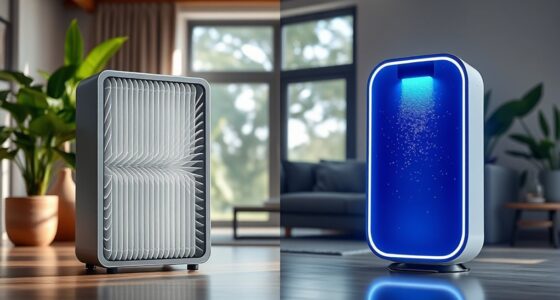
When it comes to activated carbon, adding more of it usually means better filtration because it provides more surface area and pores to trap contaminants like chemicals, odors, and toxins. Optimizing pore structure and increasing volume can substantially boost performance, often outperforming fancy features or high-tech filters. If you want to understand how to maximize your filter’s effectiveness and choose the right amount of carbon, there’s more to explore below.
Key Takeaways
- Larger amounts of activated carbon provide more surface area for contaminant adsorption, improving filtration efficiency.
- More carbon increases contact time with water or air, enhancing pollutant removal.
- Properly sized carbon volume ensures optimal pore structure and airflow, preventing clogging and maintaining performance.
- Excessive carbon does not guarantee better filtration; quality and pore distribution are more important than quantity.
- Regular replacement of saturated carbon maintains effectiveness, which is more critical than simply adding more carbon.
What Is Activated Carbon and How Does It Work?
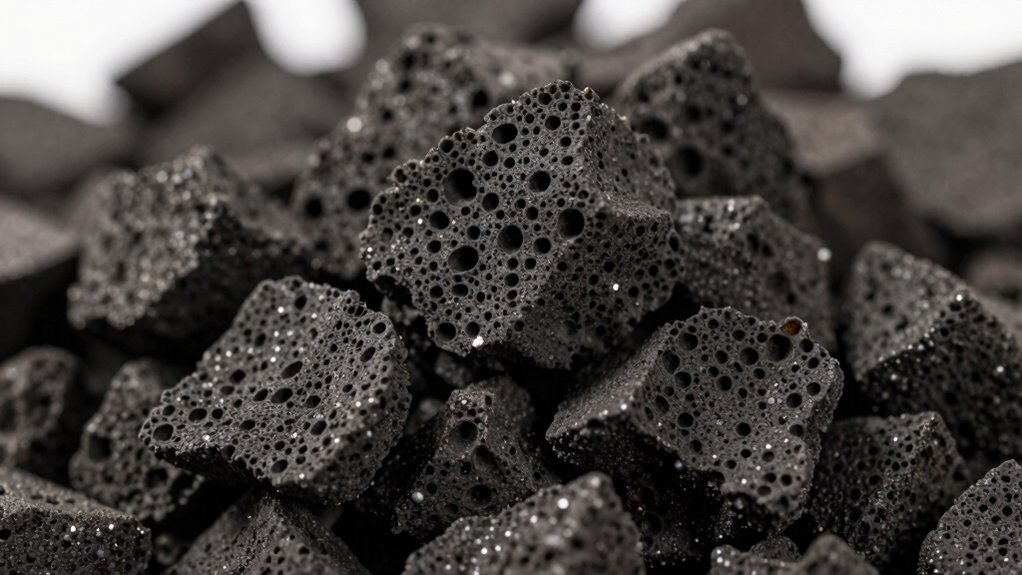
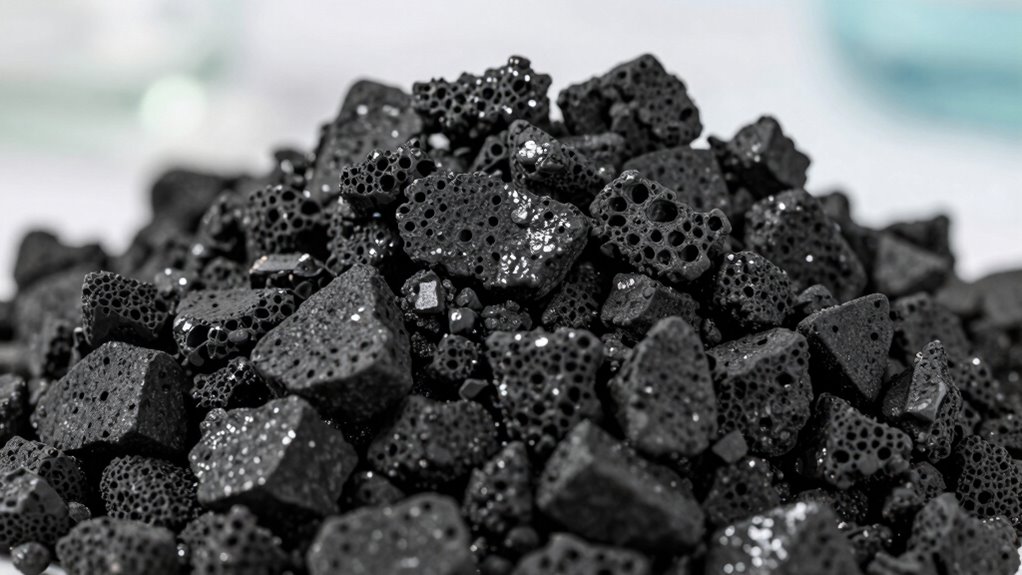
Have you ever wondered how activated carbon removes impurities from water and air? It all comes down to its unique structure. Activated carbon is made up of tiny carbon granules that have an extensive pore structure. These pores are like microscopic sponges, creating millions of surface areas where contaminants can stick. When water or air passes through, pollutants—such as chemicals, odors, and toxins—are attracted to the carbon’s surface and trapped inside the pores. This process, called adsorption, is what makes activated carbon so effective. The larger the pore structure and surface area, the more impurities it can capture. That’s why simple carbon granules, with their vast network of pores, often outperform fancier filters that lack this optimized structure.
Common Myths About Activated Carbon Filters Debunked
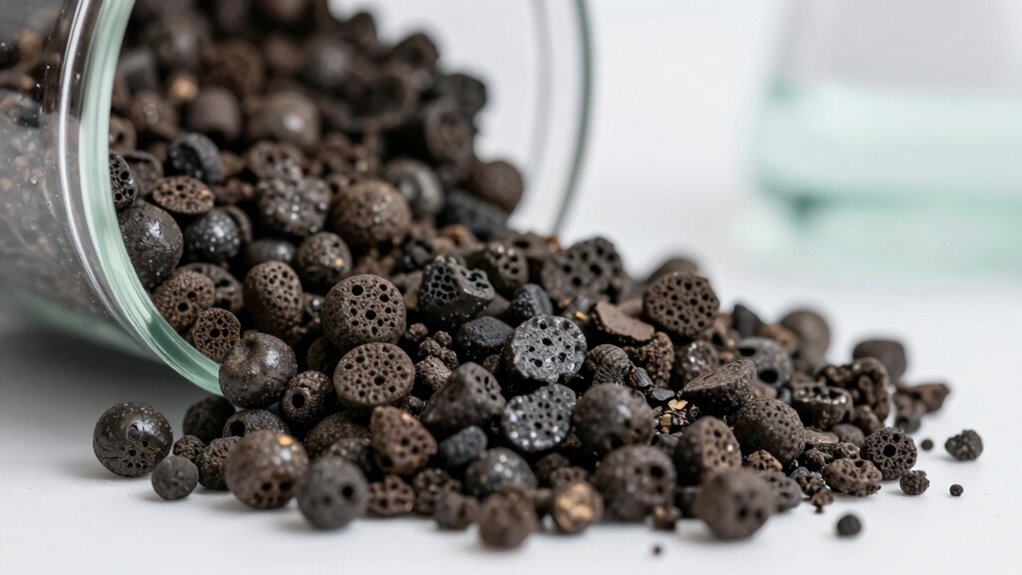
Many people believe that activated carbon filters can remove all contaminants from water or air, but that’s a common misconception. While they excel at trapping many chemicals and odors, they don’t eliminate every pollutant, especially viruses or heavy metals. Some assume that the quality of carbon sourcing doesn’t matter, but environmental impact plays a significant role. Using sustainably sourced activated carbon reduces ecological harm and supports responsible harvesting practices. Additionally, not all carbon is created equal—purity and processing affect filtration effectiveness. For example, carbon sourcing practices influence both environmental impact and filter performance. Proper filter maintenance is also essential to ensure continued effectiveness over time. Believing that more activated carbon always means better filtration is also a myth; ideal amounts depend on application. environmental impact plays a significant role in choosing the right activated carbon. Understanding these truths helps you choose and use activated carbon filters wisely, balancing performance with environmental considerations. Moreover, considering the purity and processing of the carbon can greatly enhance filtration efficiency and longevity. In addition, selecting activated carbon with appropriate particle size can optimize filtration rates and contaminant removal.
Why Using More Activated Carbon Can Boost Filtration Performance
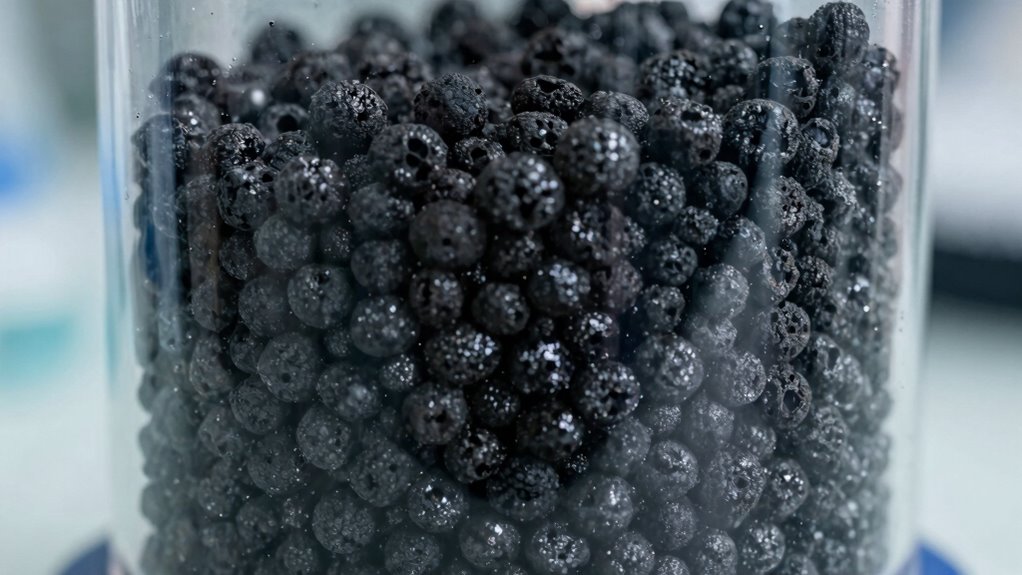
Using more activated carbon increases the adsorption capacity, allowing it to trap more contaminants. It also improves water contact with the carbon, making filtration more efficient. As a result, you’ll see better removal of impurities and cleaner water overall. Additionally, proper ventilation of the filter bed enhances airflow and contaminant exposure, further improving filtration effectiveness. Incorporating proper bed aeration techniques can help maintain optimal flow and maximize contaminant contact. Increasing the contact time between water and activated carbon can further enhance adsorption efficiency. Optimizing metabolic health through effective filtration can also support overall wellness by reducing exposure to harmful substances. Understanding media literacy helps ensure you select appropriate filtration methods and materials for your needs.
Increased Adsorption Capacity
When you increase the amount of activated carbon in your filtration system, its adsorption capacity rises considerably. More carbon provides additional surface area, allowing more contaminants to be captured through various adsorption mechanisms. The carbon pore structure plays a crucial role; a well-developed pore network offers more sites for trapping molecules. With increased volume, you enhance the likelihood of contaminants encountering active sites, boosting overall efficiency. Keep in mind, larger quantities amplify the effects of pore size distribution, which influences which molecules are adsorbed best. Here’s a quick overview:
| Feature | Impact on Adsorption Capacity |
|---|---|
| Carbon Pore Structure | More pores mean more adsorption sites |
| Adsorption Mechanisms | Increased carbon volume improves contaminant capture |
| Surface Area | Greater surface area enhances capacity |
Additionally, optimizing the pore size distribution can further improve the selectivity and effectiveness of the filtration process.
Enhanced Water Contact
Increasing the amount of activated carbon in your filter enhances water contact by providing more surface area for the water to interact with. A well-developed carbon pore structure allows water to penetrate deeper into the activated carbon, increasing the contact time and exposure to adsorption sites. This improved contact time optimization means contaminants have more opportunity to be captured effectively. When you add more carbon, you also create a denser network of pores, which enhances the overall filtration efficiency. The increased surface area ensures that pollutants, odors, and chemicals are more thoroughly adsorbed, leading to cleaner water. Additionally, a pore structure optimized for higher carbon content can further improve the flow rate and filtration consistency. Proper pore size distribution is crucial to maintain optimal flow and prevent clogging, especially as more carbon is added. To ensure consistent performance, understanding how carbon distribution affects filter longevity is essential. A balanced carbon loading can also help prevent pressure drops that reduce filtration effectiveness. Carefully managing filter maintenance and replacement schedules can extend the lifespan of your filtration system, ensuring it continues to operate efficiently. By focusing on these factors, you maximize the performance of your filtration system, making sure it works efficiently and consistently over time.
How to Calculate the Right Amount of Activated Carbon for Your Water or Air Filter
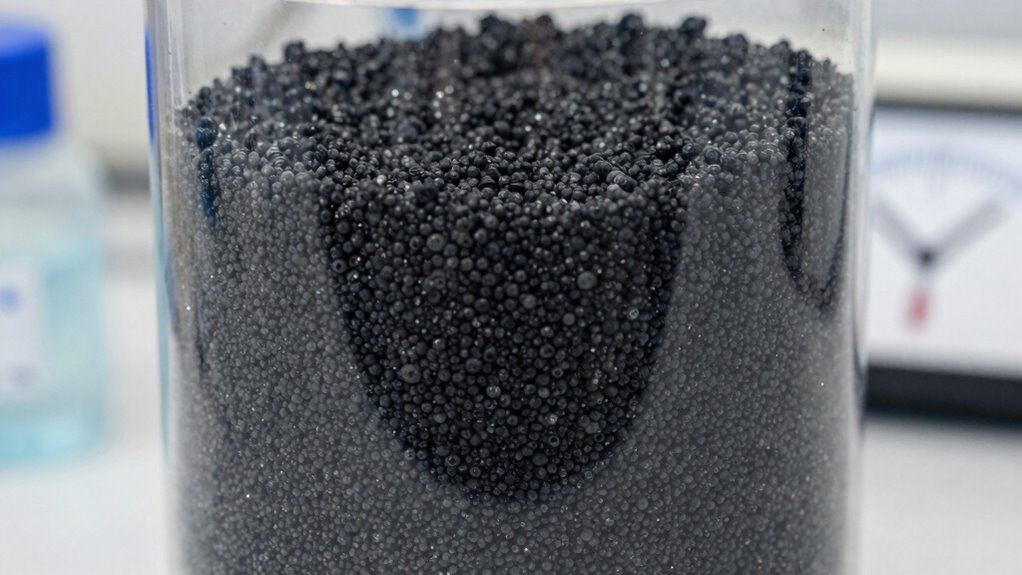
To determine the right amount of activated carbon, start by evaluating your contaminant levels. Then, calculate your filter volume to guarantee adequate contact time for effective filtration. Getting these numbers right helps you choose the ideal amount for your water or air system. Additionally, consider the specific application, such as water purification or air filtration, to select the appropriate type of activated carbon with optimal adsorption capacity. Understanding net worth of celebrities like Kate From Breaking Amish can also provide insight into industry standards and product endorsements that influence filter selections. Moreover, assessing the origin of activated carbon can help in choosing the most effective and sustainable options for your needs. Being familiar with essential DIY tools and safety tips can further ensure you perform installation or maintenance safely and effectively. Recognizing activated carbon’s surface area is crucial for maximizing its filtration efficiency and effectiveness in your system.
Determine Contaminant Levels
Accurately determining contaminant levels is essential for selecting the right amount of activated carbon for your filter. Knowing your water or air’s pollution levels helps you avoid overusing carbon, reducing your carbon footprint and supporting sustainability practices. To measure contaminants, test kits or lab analysis are your best tools. Use the table below to compare common pollutants and their typical concentrations:
| Contaminant | Typical Level (ppm or ppb) |
|---|---|
| Chlorine | 1-4 ppm |
| Volatile Organic Compounds (VOCs) | 0.5-2 ppm |
| Heavy Metals (lead, mercury) | 0.01-0.1 ppm |
| Pesticides | 0.1-1 ppb |
| Odors and tastes | N/A |
Accurate levels help you choose effective carbon, ensuring cleaner water or air with minimal waste. Additionally, understanding the contaminant levels can guide you in selecting filters with appropriate pore sizes and adsorption capacities.
Calculate Filter Volume
Wondering how much activated carbon you need for your filter? To determine the right amount, consider the carbon pore structure, which influences surface area and adsorption capacity. A larger surface area means more pores for contaminants to adhere to, enhancing filtration efficiency. Understanding adsorption kinetics helps you gauge how quickly contaminants are removed; faster kinetics require sufficient carbon volume to maintain effective contact time. Calculate your filter volume by first estimating the contaminant load and then selecting activated carbon with appropriate pore sizes. Keep in mind that more carbon generally improves adsorption performance, especially if you optimize pore structure. Properly calculating your filter volume ensures you have enough carbon to maximize contaminant removal without unnecessary excess, delivering cleaner water or air efficiently.
Comparing Basic Activated Carbon Filters to Advanced Filtration Technologies
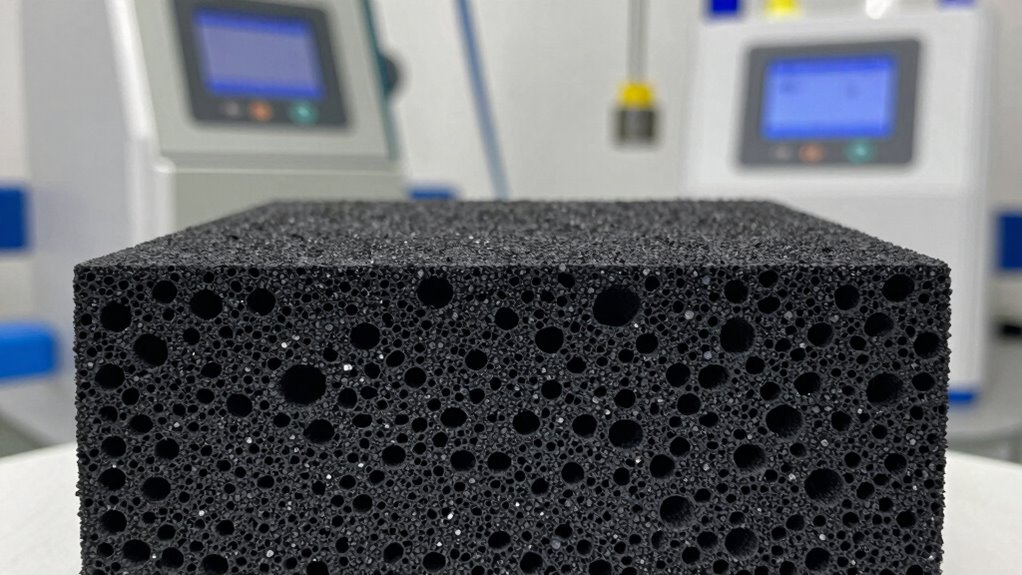
While basic activated carbon filters are effective at removing odors and certain chemicals, advanced filtration technologies often provide a broader range of contaminant removal and higher efficiency. Basic filters rely on simple carbon sourcing, which limits their ability to target diverse pollutants. In contrast, advanced systems integrate multiple methods, like reverse osmosis or UV sterilization, enhancing overall purification. These technologies often have longer filter lifespans, reducing maintenance frequency and ensuring consistent performance. However, they tend to be more expensive upfront and require more energy or infrastructure. If your goal is straightforward odor removal, basic activated carbon filters may suffice. But for all-encompassing contaminant removal and higher efficiency, investing in advanced filtration gives you a significant edge, especially in complex water or air quality scenarios.
Signs Your Activated Carbon Filter Needs Replacing or Replenishing
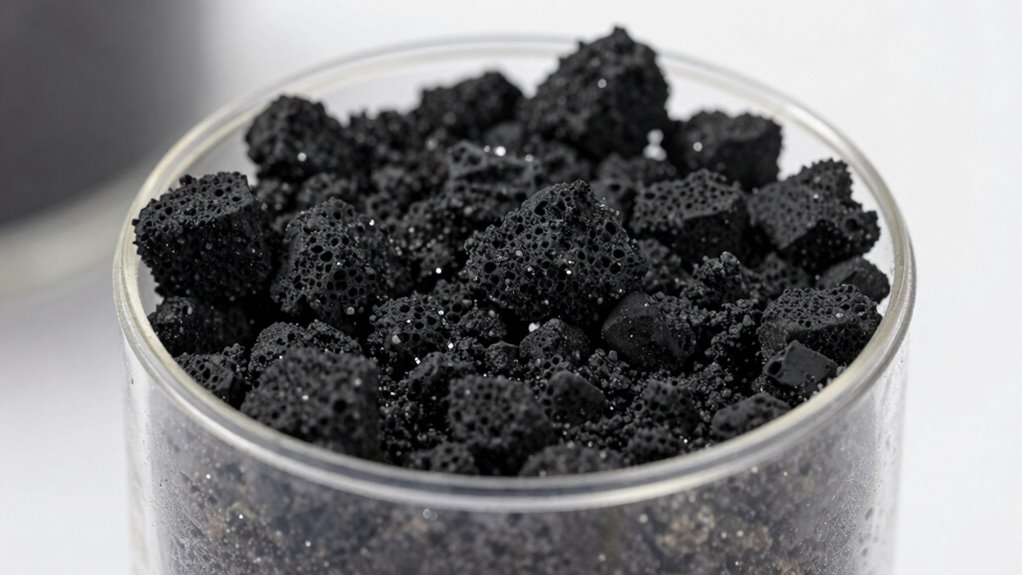
Your activated carbon filter will eventually need replacing or replenishing as its capacity to absorb odors and chemicals diminishes. One clear sign is carbon saturation, where the filter no longer effectively neutralizes smells or contaminants. If you notice persistent odors despite running your filter, it’s time to check. Additionally, over time, the filter’s lifespan is reached, and its ability to perform declines. You might also observe a decrease in air quality or a musty smell in your environment. Reduced airflow or increased resistance can indicate the filter is clogged or exhausted. Regularly monitoring these signs helps guarantee your filter remains effective. Remember, once the carbon is saturated, replacing the filter restores its ability to absorb pollutants efficiently.
Tips to Maintain and Maximize Your Activated Carbon Filter’s Effectiveness
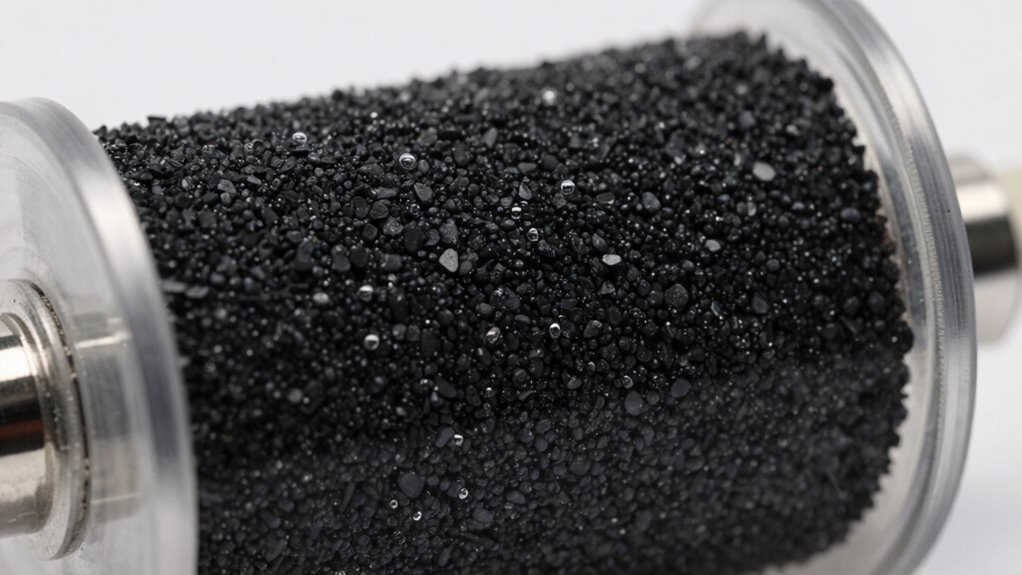
To keep your activated carbon filter working at its best, regular maintenance is essential. Replace or recharge the filter as recommended to prevent odors and contaminants from slipping through. This guarantees your system operates efficiently, reducing the need for unnecessary replacements and lowering your overall carbon footprint. Proper upkeep minimizes waste, which lessens the environmental impact of disposal. Keep an eye on the filter’s performance; a decline indicates it’s time for a change. Avoid overusing or underutilizing the filter, as both can diminish its effectiveness. By maintaining your filter diligently, you extend its lifespan, optimize purification, and contribute to a more sustainable environment. Consistent care helps you maximize your investment while supporting eco-friendly practices.
Is Buying More Activated Carbon Cost-Effective in the Long Run?
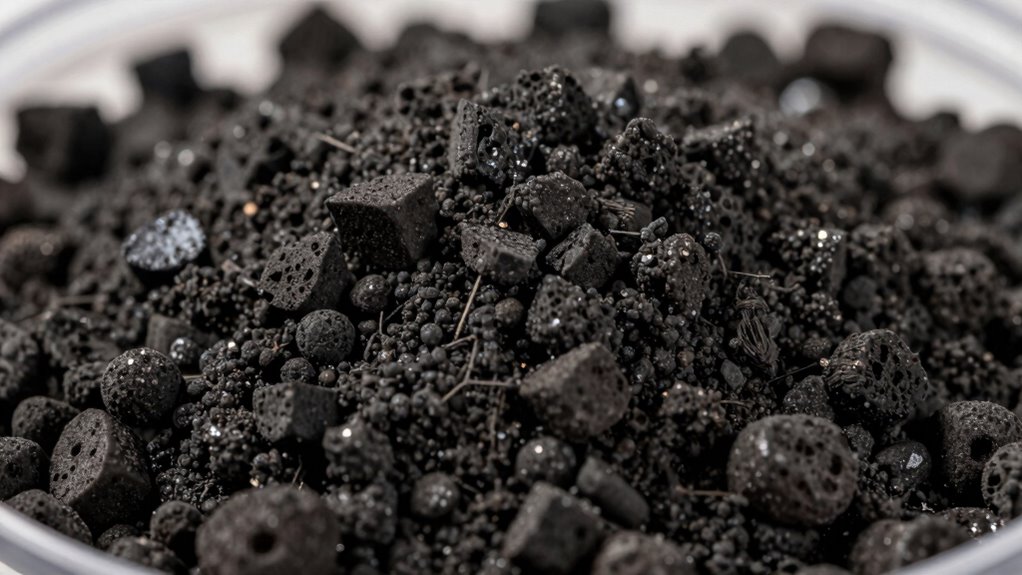
Buying larger quantities of activated carbon can seem like a smart way to save money, but it’s important to contemplate whether it truly pays off over time. A thorough cost comparison shows that bulk purchasing often reduces upfront expenses, but it may lead to wasted carbon if it’s not used efficiently or expires before full use. Additionally, consider the environmental impact—unused or expired carbon can contribute to waste. Investing in the right amount tailored to your needs minimizes waste and maximizes lifespan, making it more cost-effective in the long run. While buying more might seem economical initially, the savings diminish if the carbon isn’t fully utilized. Balancing quantity with actual demand helps you save money and reduces environmental waste, making your choice more sustainable and budget-friendly over time.
How to Choose the Best Activated Carbon Filter for Your Needs
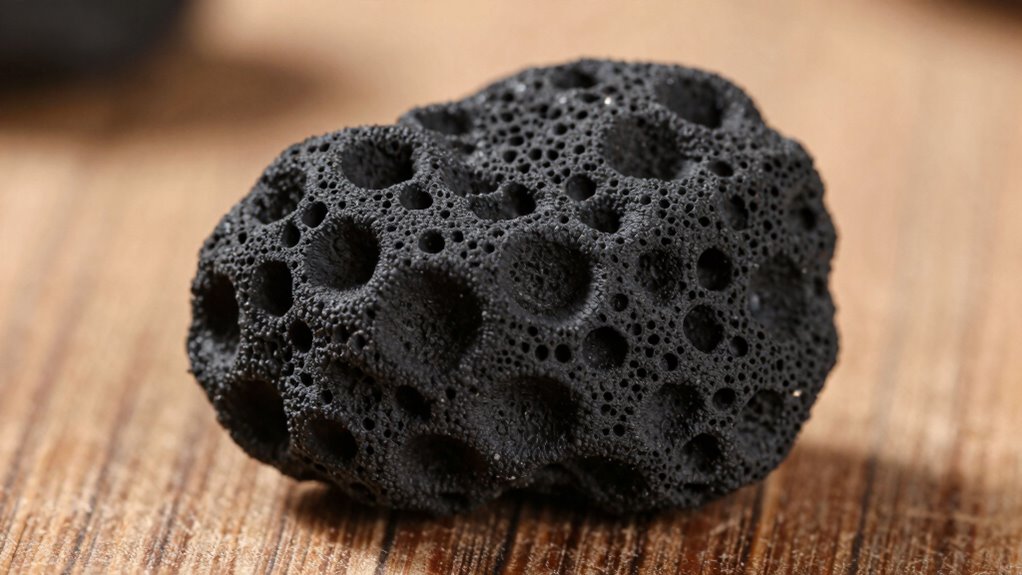
Choosing the right activated carbon filter depends on understanding your specific water or air purification needs. Start by considering the source of your carbon; high-quality carbon sourced from coconut shells or hardwood often offers better adsorption and durability. Next, evaluate how easy filter maintenance will be—look for filters that are simple to replace and fit your schedule. Think about the contaminants you’re targeting—if odors or chemicals are your main concern, a filter with a larger surface area or specific pore sizes may be best. Additionally, verify the filter’s lifespan aligns with your usage patterns, and check if replacement parts are readily available. By focusing on carbon sourcing and maintenance requirements, you’ll select a filter that offers effective, long-lasting purification tailored to your needs.
Frequently Asked Questions
Can Activated Carbon Remove All Types of Contaminants?
Activated carbon can’t remove all types of contaminants because its adsorption efficiency varies with different substances. You need to contemplate contaminant specificity; some chemicals are easier to adsorb than others. While more carbon generally improves overall removal, it doesn’t guarantee complete elimination of every contaminant. To get the best results, match the activated carbon type and amount to the specific contaminants you’re targeting, optimizing both efficiency and effectiveness.
How Long Does Activated Carbon Typically Last Before Replacement?
Activated carbon typically lasts between 6 to 12 months before replacement, depending on your usage and water quality. You should monitor the lifetime estimation for your specific system, as it influences the replacement frequency. When the carbon becomes saturated, you’ll notice decreased effectiveness. To keep your system working efficiently, replace the activated carbon regularly based on these guidelines and your system’s performance.
Is It Safe to Reuse or Regenerate Spent Activated Carbon?
Sure, you can safely reuse and regenerate spent activated carbon, but only if you follow proper procedures. Carbon regeneration involves cleaning and restoring the carbon’s adsorption capacity, but safety considerations are vital. You need to guarantee proper handling, ventilation, and testing to prevent hazards. Always verify that regenerated carbon meets safety standards, as improper regeneration can release contaminants or create risks. When in doubt, consult professionals for safe, effective reuse.
Does Activated Carbon Impact the Taste or Smell of Water or Air?
Yes, activated carbon impacts the taste and smell of water or air by enhancing flavor and suppressing odors. You’ll notice cleaner, fresher water or air because activated carbon absorbs impurities that cause bad tastes and odors. It’s especially effective at removing chlorine, organic compounds, and other contaminants. So, if you want your water or air to smell fresh and taste better, using activated carbon is a smart choice for odor suppression and flavor enhancement.
Are There Environmental Concerns With Disposing of Used Activated Carbon?
You should consider the environmental impact of disposing of used activated carbon, as it can contain pollutants like heavy metals or organic compounds. Disposal regulations vary by location, so you need to adhere to local guidelines to prevent contamination. Recycling or regenerating activated carbon is often recommended to reduce waste and environmental harm. Proper disposal not only protects ecosystems but also ensures compliance with safety standards.
Conclusion
Remember, when it comes to activated carbon, more is often better—like adding extra spices to your favorite dish. It’s your secret weapon against unwanted odors and impurities, turning a simple filter into a powerhouse. Don’t settle for the fancy bells and whistles if a hearty scoop of more carbon gets the job done. Keep your filter well-stocked and maintained, and you’ll enjoy fresh, clean air or water as reliably as a sunrise after a long night.