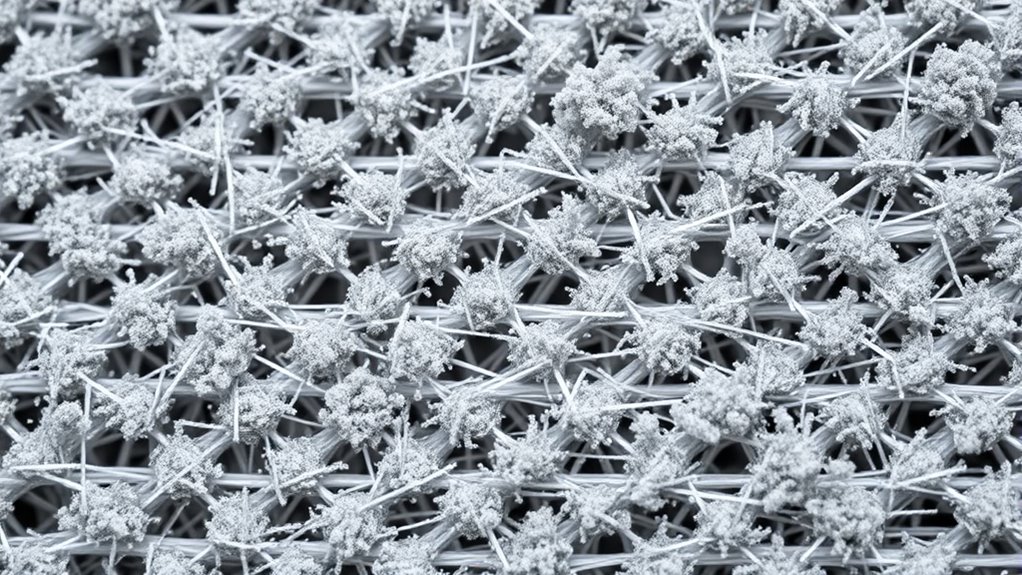
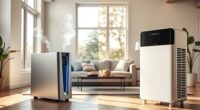
HEPA filters trap particles by guiding air through a dense network of fibers that causes turbulence, increasing the chances of particles hitting the fibers. Tiny particles like allergens or bacteria collide with these fibers and get trapped, thanks to the filter’s fine mesh. Its design maximizes contact while allowing air to flow smoothly. If you want to understand how this balance works and the science behind it, you’ll find more details inside.
Key Takeaways
- HEPA filters use dense, randomly arranged fibers to physically trap particles as air passes through.
- Turbulent airflow increases particle-fiber contact, enhancing capture efficiency for tiny particles.
- Smaller gaps between fibers improve the likelihood of trapping microscopic particles like allergens and bacteria.
- The filter design balances high filtration performance with minimal airflow resistance.
- Material innovations and optimized airflow dynamics ensure effective, durable particle removal while maintaining airflow.
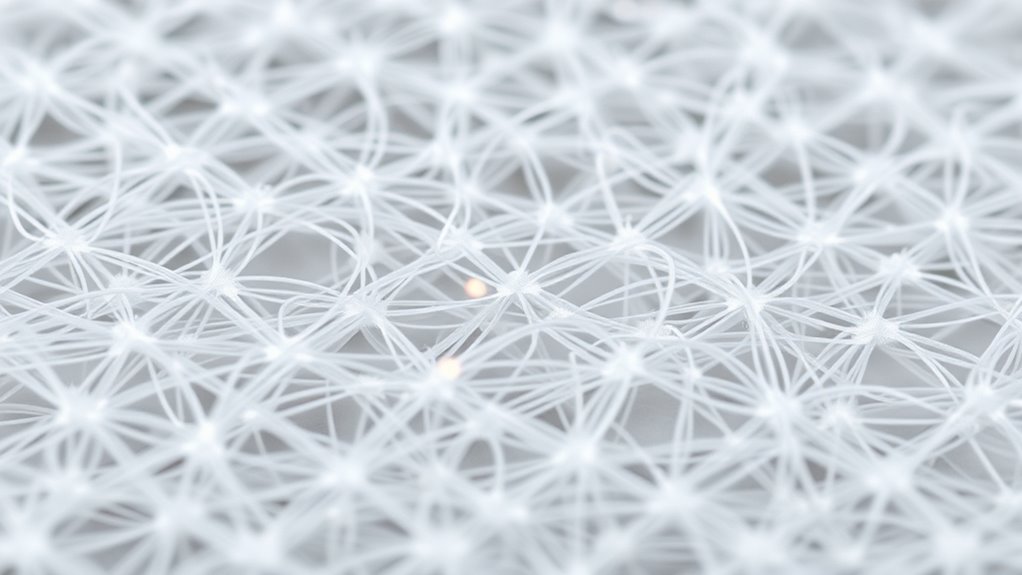
High-efficiency particulate air (HEPA) filters are designed to trap tiny particles that can harm your health or degrade air quality. To understand how they do this, you need to grasp the underlying principles of airflow dynamics and filter materials. Airflow dynamics refers to how air moves through the filter, influencing how effectively particles are captured. When air passes through a HEPA filter, it doesn’t just flow straight through; it navigates a complex path that increases the chances of particles colliding with the filter fibers. This turbulent flow pattern enhances the filter’s ability to trap particles, especially those that are extremely small, like allergens, bacteria, or smoke particles. The design of HEPA filters maximizes this interaction, ensuring that as much air as possible is filtered before it circulates back into your space.
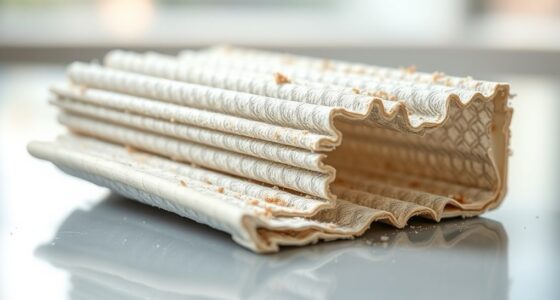
The filter materials are at the core of a HEPA filter’s effectiveness. These filters are composed of dense, randomly arranged fibers made from materials such as fiberglass or synthetic polymers. These fibers are carefully engineered to create a fine mesh that can catch particles while still allowing air to flow through. The fiber density and the arrangement are vital because they determine the filter’s efficiency. The smaller the gaps between fibers, the more effective the filter is at capturing tiny particles. However, if the fibers are packed too tightly, airflow resistance increases, which can reduce airflow and strain your system. That’s why HEPA filters strike a balance, using high-quality materials that optimize particle capture without overly restricting airflow.
Understanding airflow dynamics and filter materials helps you appreciate how HEPA filters efficiently trap particles. They are designed not just to catch debris but to optimize airflow while doing so, ensuring your indoor air remains cleaner and healthier. Additionally, advances in filter material technology continue to improve their effectiveness and lifespan. This intricate balance between airflow control and material engineering is what makes HEPA filters a reliable solution for improving air quality in homes, hospitals, and workplaces.
Frequently Asked Questions
How Long Do HEPA Filters Typically Last Before Replacement?
HEPA filters typically last about 6 to 12 months before replacement, depending on usage and air quality. You should monitor the filter’s lifespan and replace it when it becomes visibly dirty or if your air purifier’s performance declines. To maintain peak filtration, follow the manufacturer’s recommended replacement frequency, usually once a year or sooner if you notice reduced airflow or increased dust in your environment.
Can HEPA Filters Remove Gases and Odors Effectively?
HEPA filters excel at trapping particles but don’t remove gases or odors effectively. For gas filtration and odor removal, you’ll want to look for filters with activated carbon or charcoal layers. These specialized filters absorb gases and neutralize odors, complementing HEPA’s particle trapping capabilities. Combining both types guarantees your air is cleaner, free of airborne particles, gases, and unpleasant smells for a healthier indoor environment.
Are HEPA Filters Effective Against Viruses and Bacteria?
Yes, HEPA filters are effective against viruses and bacteria through virus filtration and bacterial removal. They trap tiny pathogens by capturing airborne particles as small as 0.3 microns, which includes most viruses and bacteria. When you use a HEPA filter, you considerably reduce the risk of airborne infections, making your environment safer. Keep in mind, though, that proper maintenance and filter replacement are essential for peak virus filtration and bacterial removal.
How Does Humidity Affect HEPA Filter Performance?
Humidity impacts HEPA filter performance more than you might think—it’s like a silent villain sneaking in. When moisture effects increase, they can cause particles to clump together, making filters less efficient. High humidity may also encourage mold growth inside the filter, reducing its lifespan. On the flip side, very low humidity can cause static buildup, hindering airflow. Maintaining ideal humidity ensures your HEPA filter works at its best, trapping particles effectively.
Do All HEPA Filters Meet the Same Efficiency Standards?
Not all HEPA filters meet the same efficiency standards, but they all should have proper filter certification to guarantee performance. When shopping, you’ll want to check for certifications like HEPA, which guarantee they trap at least 99.97% of particles. Different standards exist depending on the application, so verify that your filter complies with recognized efficiency standards to ensure it effectively cleans the air in your space.
Conclusion
Now that you understand how HEPA filters work, you can see they’re like vigilant guardians, tirelessly catching even the tiniest particles. They’re your shield against harmful pollutants, silently protecting your health and well-being. Remember, every filter is a small hero in your space, fighting an invisible battle so you don’t have to face the storm. Trust in their power—because when it comes to clean air, every breath you take is a precious gift worth defending.