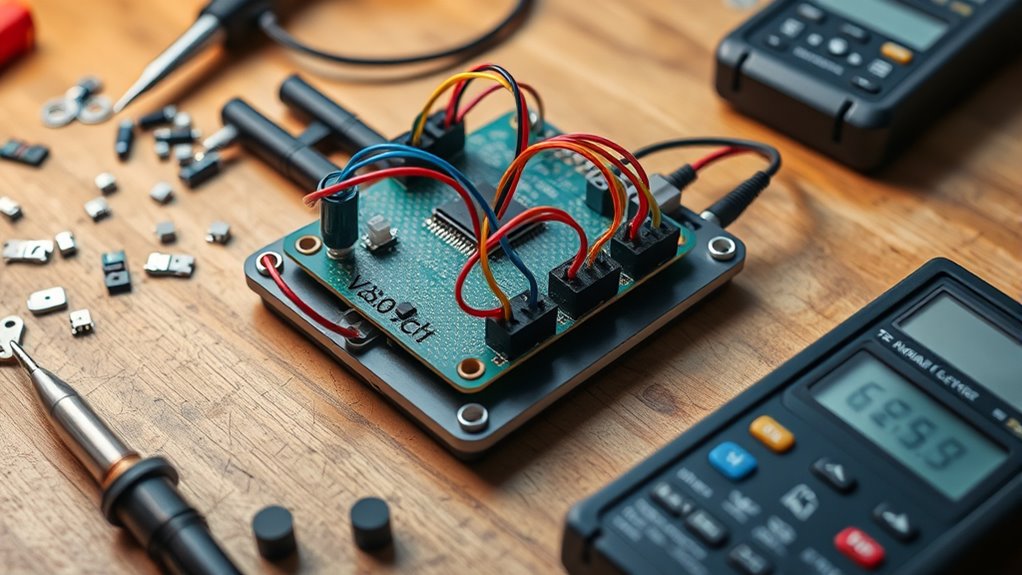

To make a simple volatile gas detector with low-cost sensors, start by selecting affordable sensors like MQ-series modules for gases such as LPG, methane, or carbon monoxide. Connect them to a microcontroller like Arduino or ESP32, guaranteeing you include proper ADCs for accurate readings. Calibrate your sensor using known gas concentrations to ensure reliable detection. Pay attention to circuit stability and power management to improve longevity. If you continue exploring, you’ll find tips to optimize your design for better accuracy and safety.

Get home appliances delivered free with Prime
- Fast, free delivery on millions of items
- Prime Video, Amazon Music and more included
- Member-only deals all year
Key Takeaways
- Select affordable gas sensors like MQ-series for detecting volatile gases such as LPG or methane.
- Calibrate sensors using known gas concentrations to ensure accurate, reliable readings.
- Use microcontrollers (Arduino, ESP32) with ADCs to read sensor outputs and process signals effectively.
- Incorporate simple alert mechanisms like LEDs or buzzers to indicate dangerous gas levels.
- Regularly recalibrate sensors to maintain accuracy, accounting for environmental factors and sensor aging.
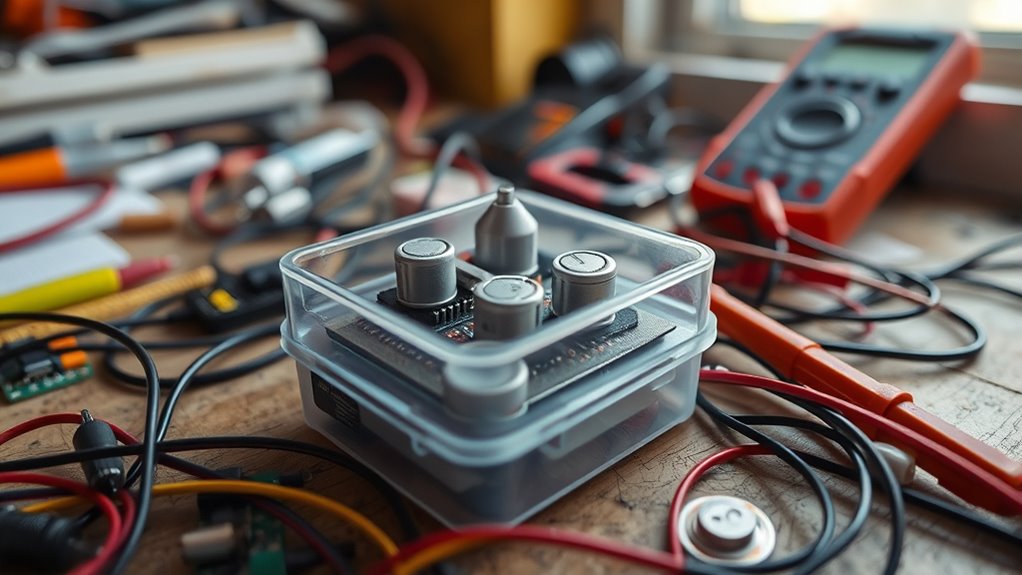
Detecting harmful gases quickly and affordably is vital for guaranteeing safety in homes and workplaces. Building a simple gas detector with low-cost sensors is an effective way to monitor volatile gases like LPG, methane, or carbon monoxide without breaking the bank. The key to making your detector reliable lies in proper sensor calibration and thoughtful circuit design. When you calibrate your sensor, you guarantee that its readings are accurate and consistent, which is essential for safety. Calibration involves exposing the sensor to known concentrations of gases and adjusting the output or circuit parameters so that the readings match those known values. This step helps eliminate false alarms and guarantees your sensor responds correctly over time.
Proper sensor calibration ensures accurate, reliable gas detection for safe, cost-effective monitoring.
In your project, sensor calibration is a critical step. You’ll start by exposing the sensor to a controlled environment with a known concentration of the target gas. Using a simple multimeter or microcontroller, you can record the sensor’s output voltage or resistance and compare it to the standard concentration. Adjustments, such as software calibration factors or hardware tweaks, help refine the sensor’s response. Regular calibration checks are recommended, especially if the sensor is used continuously, because sensor sensitivity can drift over time due to environmental factors or aging. Sensor calibration is essential for ensuring consistent and accurate readings over the lifespan of your detector.
Circuit design is equally vital. You need a circuit that can accurately read the sensor’s signals and process them for easy interpretation. Typically, low-cost gas sensors output an analog voltage or resistance change, so your circuit should include an analog-to-digital converter (ADC) if you’re using a microcontroller. A simple design might involve a microcontroller like an Arduino or ESP32, which reads sensor data, processes it, and then triggers an alert if dangerous levels are detected. Including a stable power supply, filtering components like capacitors, and a clear display or indicator LED helps make your detector dependable and user-friendly.
Additionally, think about how your circuit handles power management. You want your detector to be energy-efficient, especially if it runs on batteries. Using sleep modes or low-power components can extend your device’s lifespan. Incorporate safety features such as warning beepers or visual indicators that activate at preset thresholds. This way, you’re not only detecting gases but also providing an immediate alert before levels become hazardous.
Products Worth Considering

eufy C28 Robot Vacuum and Mop with 15,000 Pa Suction

Levoit Vital 100S-P Air Purifier with Washable Pre-Filter

Ring Battery Doorbell 2K Plus, Indoor Cam 2K, and Window & Door Sensor Bundle
As an affiliate, we earn on qualifying purchases.
Frequently Asked Questions
How Accurate Are Low-Cost Gas Sensors Compared to Professional Detectors?
Low-cost gas sensors are generally less accurate than professional detectors, but with proper sensor calibration, you can enhance their reliability. Keep in mind, these sensors often have limited sensor durability, which can affect long-term accuracy. Regular calibration and maintenance help ensure your device stays reasonably precise, but for critical applications, professional detectors are still the better choice due to their higher accuracy and more robust sensor technology.
Can This Detector Identify Specific Volatile Gases?
Your simple gas detector can identify specific volatile gases if it has sensors with good specificity. While basic sensors may detect the presence of gases, they often lack the ability to distinguish between different volatile compounds effectively. To improve gas identification, consider using sensors designed for higher specificity. Keep in mind, low-cost sensors usually have limitations in sensor specificity, so they might not reliably identify individual volatile gases in complex environments.
What Is the Typical Lifespan of Inexpensive Gas Sensors?
They say “you get what you pay for,” and inexpensive gas sensors typically last 1 to 2 years. Sensor degradation occurs over time, reducing accuracy, so regular calibration is essential—every 3 to 6 months—to maintain reliable detection. Keep in mind, cheaper sensors often need more frequent calibration, and their lifespan can vary based on usage and environment. Stay vigilant to ensure safety and sensor effectiveness.
How Should I Calibrate the Sensors for Reliable Readings?
To guarantee reliable readings, you should calibrate your sensors regularly, ideally every few weeks, to counteract sensor drift. Use a known concentration of the target gas for calibration, and record the sensor’s response to identify any deviations. Frequent calibration helps maintain accuracy, especially since low-cost sensors are more prone to drift over time. Always follow the manufacturer’s guidelines for calibration frequency and procedures.
Is This Detector Suitable for Outdoor or Industrial Environments?
This detector is more suitable for outdoor or controlled indoor environments, as environmental impacts like humidity and temperature fluctuations can affect sensor durability and accuracy. In industrial settings, harsh conditions may shorten sensor lifespan and lead to unreliable readings. To guarantee safety, you should regularly check and maintain your detector, and consider protective enclosures or environmental compensation features if using it outdoors or in demanding environments.
Conclusion
By building this simple, low-cost gas detector, you can quickly identify dangerous leaks before they become serious. Imagine you’re cooking and smell a faint gas odor; with your homemade sensor, you can confirm if there’s a leak and act fast. This affordable device puts safety in your hands, helping you prevent accidents in everyday situations or small workshops. With just a few sensors, you gain peace of mind and a proactive way to stay safe.