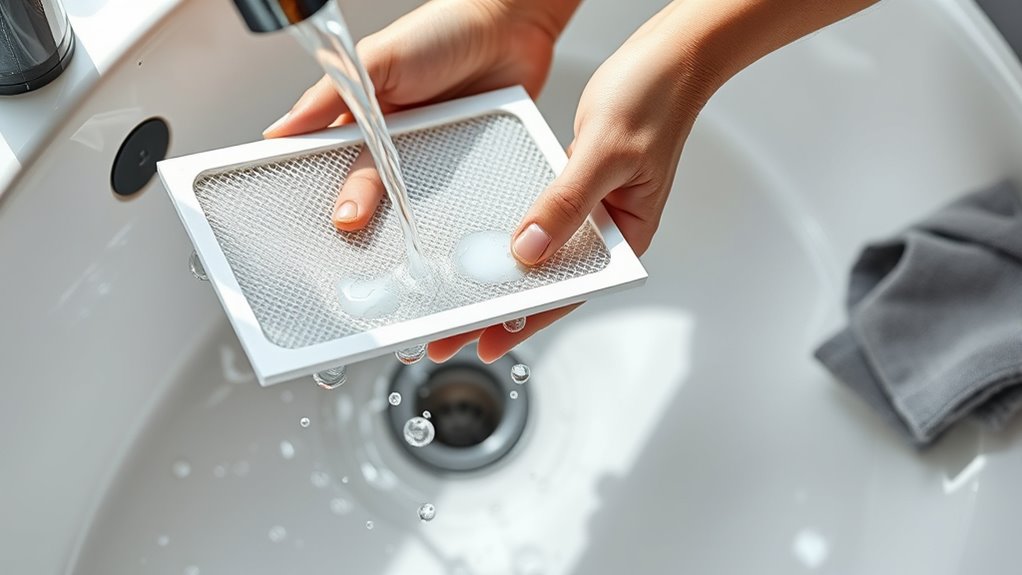

To care for your reusable filter, regularly inspect it for dirt or clogs and wash it with lukewarm water, using a gentle brush or sponge. Shake off excess water and let it air dry in a well-ventilated area—avoid towels or cloths that can damage the fibers. Always follow manufacturer instructions and know your filter material to prevent damage. Keep your filter in top shape and discover more tips as you continue caring for it effectively.

Get home appliances delivered free with Prime
- Fast, free delivery on millions of items
- Prime Video, Amazon Music and more included
- Member-only deals all year
Key Takeaways
- Regularly inspect filters for dirt or clogs and clean them when dirty.
- Wash reusable filters with lukewarm water and a gentle brush, avoiding harsh soaps.
- Rinse thoroughly to remove soap residues and shake off excess water before drying.
- Air dry filters in a well-ventilated area, avoiding towels or cloths that can damage fibers.
- Follow manufacturer instructions specific to your filter material to prevent damage and maintain effectiveness.

Are you making the most of your reusable filters? Proper maintenance is vital not just for extending their filter lifespan but also for improving air quality in your home. When you take the time to wash and dry your reusable filters correctly, you guarantee they function at their best, trapping dust, allergens, and pollutants more effectively. This keeps the air you breathe cleaner and healthier.
Properly maintaining reusable filters extends their lifespan and ensures cleaner, healthier indoor air.
Start by inspecting your filter regularly. If it looks dirty or clogged, it’s time for a thorough cleaning. The key to maintaining superior air quality is to remove built-up debris that can hinder airflow and reduce filtration efficiency. Most reusable filters can be washed with water, but always check the manufacturer’s instructions first. Typically, using lukewarm water and a gentle brush or sponge works well to dislodge dirt without damaging the filter material. Avoid harsh soaps or cleaning agents, as they might compromise the filter’s structure or leave residues that can affect air quality.
While washing, make sure to rinse the filter thoroughly to remove all dirt and soap residues. Residual soap can cause buildup or emit odors, negating the benefits of your filter. Once cleaned, it’s essential to dry your filter completely before reinstalling it. Moisture left behind can promote mold growth or bacterial buildup, which not only shortens the filter’s lifespan but also diminishes its ability to improve air quality. Air drying is best; simply shake off excess water and leave it in a well-ventilated area. Avoid using a towel or cloth to dry your filter, as fibers can get caught in the material or cause damage. Additionally, understanding the filter material can help you select the most suitable cleaning method to prevent damage.
Maintaining a routine for washing and drying your reusable filters ensures they stay effective longer. This proactive approach helps you avoid replacing filters prematurely, saving money and reducing waste. Plus, a clean filter means better airflow, which means your HVAC system doesn’t have to work as hard, reducing energy consumption. Keep in mind that over time, filters will inevitably lose their effectiveness, and replacing them after a certain period or when they show signs of wear is vital for maintaining good air quality.
Products Worth Considering

Levoit Vital 100S-P Air Purifier with Washable Pre-Filter

LEVOIT Vital 200S-P Smart Air Purifier for Large Rooms, White

Blueair Blue Pure 311i Max Smart Air Purifier
As an affiliate, we earn on qualifying purchases.
Frequently Asked Questions
How Often Should I Replace My Reusable Filter?
You should replace your reusable filter every 3 to 6 months, depending on its filter lifespan and usage. Regularly check for signs of wear, reduced airflow, or buildup, which indicate it’s time for a replacement. Following the recommended replacement frequency helps maintain ideal air quality and filter efficiency. Keep track of your filter’s condition, and don’t wait too long to replace it to ensure your system works effectively.
Can I Use Bleach to Disinfect My Filter?
Using bleach to disinfect your reusable filter isn’t the best idea—you don’t want to risk damaging it, and bleach safety can be tricky. Instead, think of disinfection alternatives like vinegar or hydrogen peroxide, which are safer and effective. These options kill germs without harming your filter’s material. Always rinse thoroughly after cleaning and dry completely to keep your filter in top shape—don’t throw the baby out with the bathwater.
Are There Specific Detergents Recommended for Washing Filters?
You should use mild, filter cleaning agents specifically designed for reusable filters. Avoid harsh chemicals that could damage the filter material. Eco-friendly detergents are a great choice because they clean effectively while being gentle on the environment. Always follow the manufacturer’s instructions for washing, and rinse thoroughly to remove any residue. Using the right detergents helps maintain your filter’s performance and extends its lifespan.
How Do I Prevent Mold Growth on the Filter?
Think of your filter as a garden that needs tending to thrive. To prevent mold growth, guarantee proper filter maintenance by washing it regularly with a gentle detergent and thoroughly drying it before use. Keep the filter in a dry, well-ventilated area, and avoid leaving it damp. These steps will help you prevent mold, extend your filter’s lifespan, and keep your air clean and fresh.
Can I Wash My Filter in the Dishwasher?
You can wash your filter in the dishwasher if it’s dishwasher safe and compatible with dishwasher cleaning. Check the manufacturer’s instructions to verify dishwasher safety and filter compatibility. Place the filter on the top rack, use a gentle cycle, and avoid harsh detergents. After washing, let it dry completely before reinstalling. This method helps keep your filter clean without risking damage or mold growth.
Conclusion
By following these cleaning and drying tips, you’ll keep your reusable filter working like new. Think of your filter as a loyal friend—you need to care for it regularly to guarantee it performs at its best. When you wash and dry it properly, you’re giving it the fresh start it needs, much like a gardener tending to delicate plants. With a little effort, you’ll enjoy cleaner air and a filter that’s always ready to serve you well.