Editorial update log
November 17, 2026:
Deal update: RoundupForge price history now flags ASIN B075BF6V58 on amazon.com as below its typical tracked range. RF labels the deal as all_time_low.
Exact pricing remains intentionally gated through the live Grimfaste price module in the article.
For most homes, I’d start with the ecobee Smart Thermostat Enhanced for its balance of scheduling, room comfort features, and broad smart home support. The Amazon Smart Thermostat is a simpler route for Alexa households, while the Google Nest Learning Thermostat (4th Gen) suits buyers who want more automated temperature adjustments. The main tradeoffs are system compatibility, the need for a C-wire, and whether room sensors or advanced integrations justify a more involved setup. This roundup compares 15 smart thermostats across those practical differences. Read on to match a thermostat to your home, habits, and HVAC wiring.

Get home appliances delivered free with Prime
- Fast, free delivery on millions of items
- Prime Video, Amazon Music and more included
- Member-only deals all year
Complete the kit


Key Takeaways
- ecobee Smart Thermostat Enhanced is the strongest all-around fit in this lineup when room comfort features and smart home flexibility matter together.
- Amazon Smart Thermostat keeps things straightforward for Alexa homes, while the two-pack version makes more sense when the buyer needs multiple zones and has compatible wiring.
- Google Nest Learning Thermostat (4th Gen) is the lineup’s clearest choice for buyers who want learning-based adjustments and a temperature sensor in the package.
- Sensi Lite ST25 and ecobee Smart Thermostat Essential focus on simpler everyday control; fewer advanced extras can make setup and daily use less demanding.
- The Honeywell models offer several paths through a familiar thermostat style, but model names alone do not settle compatibility: buyers still need to check wiring, HVAC type, and any required power adapter.
| Honeywell Home RTH9585WF Wi-Fi Smart Color Thermostat |  | Best for Scheduling and Home Energy Reports | Model: RTH9585WF | Connectivity: Wi-Fi | Display: Customizable color touchscreen | VIEW LATEST PRICE | See Our Full Breakdown |
| ecobee Smart Thermostat Enhanced, Programmable Wi-Fi Thermostat |  | Best for Occupancy-Based Comfort | HVAC compatibility: Compatible with 90% of HVAC systems | Included installation accessories: Power Extender Kit (PEK) and trim kit | Smart home compatibility: Amazon Alexa, Google Assistant, Apple HomeKit, SmartThings | VIEW LATEST PRICE | See Our Full Breakdown |
| Sensi Smart Wi-Fi Thermostat ST55 |  | Best for Straightforward DIY Installation | Model: ST55 | Connectivity: Wi-Fi | Voice assistant compatibility: Amazon Alexa | VIEW LATEST PRICE | See Our Full Breakdown |
| Honeywell Home RTH9600WF Smart Color Wi-Fi Thermostat |  | Best for a Clear On-Wall Display | Model: RTH9600WF | Display: Customizable color touchscreen | Connectivity: Wi-Fi | VIEW LATEST PRICE | See Our Full Breakdown |
| Sensi Lite Wi-Fi Smart Thermostat, Alexa Compatible, ENERGY STAR Certified, ST25 | 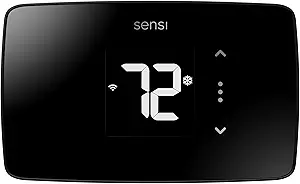 | Best for Essential Smart Controls | Model: ST25 | Connectivity: 2.4 GHz Wi-Fi | Control methods: App, touch, voice | VIEW LATEST PRICE | See Our Full Breakdown |
| Amazon Smart Thermostat |  | Best for Alexa Households | Smart home compatibility: Alexa and select Alexa devices | Ring compatibility: Works with Ring | Wiring requirement: C-wire required | VIEW LATEST PRICE | See Our Full Breakdown |
| Google Nest Thermostat, Smart Wi-Fi Thermostat, Charcoal |  | Best for Easy Scheduling | Color: Charcoal | Wi-Fi: 802.11b/g/n (2.4 GHz) and 802.11a/n (5 GHz) | Bluetooth: Bluetooth Low Energy | VIEW LATEST PRICE | See Our Full Breakdown |
| WiFi Smart Thermostat for Single-Stage Heating and Cooling |  | Best for Basic Single-Stage Systems | System compatibility: Conventional single-stage, 1 heat/1 cool | Power: 24V AC; C-wire required; no batteries | Wi-Fi: 2.4GHz only; 5GHz not supported | VIEW LATEST PRICE | See Our Full Breakdown |
| ecobee Smart Thermostat Premium with Wi-Fi, SmartSensor, and Built-In Siri and Alexa |  | Best for Whole-Home Comfort | Connectivity: Wi-Fi | Voice assistants: Siri and Alexa built in | Included accessory: SmartSensor | VIEW LATEST PRICE | See Our Full Breakdown |
| Google Nest Learning Thermostat (4th Gen) with Nest Temperature Sensor (2nd Gen), Obsidian |  | Best for Adaptive Comfort | Thermostat generation: 4th generation | Included sensor: Nest Temperature Sensor (2nd generation) | Color: Obsidian | VIEW LATEST PRICE | See Our Full Breakdown |
| Amazon Smart Thermostat with Alexa and Ring Compatibility, Pack of 2 |  | Best for Alexa Homes with Multiple Zones | Pack size: 2 thermostats | Compatibility: Alexa and Ring | Installation: DIY; C-wire required | VIEW LATEST PRICE | See Our Full Breakdown |
| Honeywell Home X2S Smart Wi-Fi Thermostat |  | Best for Matter Flexibility | Connectivity: Wi-Fi 2.4 or 5 GHz | Smart-home compatibility: Matter, Amazon Alexa, Google Assistant, and Apple HomeKit | System compatibility: Up to 2 heat/2 cool conventional or 2 heat/1 cool heat pump with electric backup | VIEW LATEST PRICE | See Our Full Breakdown |
| Google Nest Thermostat, Smart Wi-Fi Programmable Thermostat, Snow |  | Best for Homes Without a C-Wire | Color: Snow | Connectivity: Wi-Fi | Energy certification: ENERGY STAR | VIEW LATEST PRICE | See Our Full Breakdown |
| Honeywell Home T5 Smart Wi-Fi Thermostat |  | Best for Geofencing Schedules | Model: T5 | Connectivity: Wi-Fi | Certification: ENERGY STAR | VIEW LATEST PRICE | See Our Full Breakdown |
| ecobee Smart Thermostat Essential Wi-Fi Thermostat |  | Best for Broad HVAC Compatibility | Connectivity: Wi-Fi | Certification: ENERGY STAR | System compatibility: Most 24 VAC HVAC equipment; compatible with 85% of systems | VIEW LATEST PRICE | See Our Full Breakdown |
| smart thermostat | Connectivity | Certification |
|---|---|---|
| Honeywell Home RTH9585WF Wi-Fi | Wi-Fi | ENERGY STAR |
| ecobee Smart Thermostat Enhanc | — | — |
| Sensi Smart Wi-Fi Thermostat S | Wi-Fi | ENERGY STAR |
| Honeywell Home RTH9600WF Smart | Wi-Fi | ENERGY STAR |
| Sensi Lite Wi-Fi Smart Thermos | 2.4 GHz Wi-Fi | — |
| Amazon Smart Thermostat | — | — |
| Google Nest Thermostat | — | ENERGY STAR |
| WiFi Smart Thermostat for Sing | — | — |
| ecobee Smart Thermostat Premiu | Wi-Fi | — |
| Google Nest Learning Thermosta | — | — |
| Amazon Smart Thermostat with A | — | ENERGY STAR |
| Honeywell Home X2S Smart Wi-Fi | Wi-Fi 2.4 or 5 GHz | ENERGY STAR and Matter |
| Google Nest Thermostat | Wi-Fi | — |
| Honeywell Home T5 Smart Wi-Fi | Wi-Fi | ENERGY STAR |
| ecobee Smart Thermostat Essent | Wi-Fi | ENERGY STAR |
More Details on Our Top Picks
Honeywell Home RTH9585WF Wi-Fi Smart Color Thermostat
The RTH9585WF suits households that want detailed scheduling and useful system feedback on the thermostat itself. Its customizable color touchscreen puts schedules, weather forecasts, energy reports, and equipment alerts within easy reach, while app and voice control cover changes made away from home. Compared with the Sensi Smart Wi-Fi Thermostat ST55, this Honeywell offers a more information-rich display and broader listed HVAC compatibility, while the Sensi is the easier fit for homes where avoiding a C-wire matters. The tradeoff is clear: this model requires a C-wire and does not work with electric baseboard heat. It makes most sense for owners of compatible central HVAC who want a visible control center and are willing to confirm wiring before installation.
Pros:- Customizable touchscreen presents settings and comfort information at the thermostat
- Flexible 7-day scheduling supports different routines across the week
- App, Alexa, and Google Home control provide remote and voice access
- Energy reports, weather forecasts, and equipment alerts add useful system context
Cons:- Requires a C-wire for power
- Not compatible with 120–240V electric baseboard heat
Best for: Households with compatible central HVAC and a C-wire that want on-device scheduling, weather, and energy information.
Not ideal for: Homes with electric baseboard heating or no C-wire and no suitable power adapter.
- Model:RTH9585WF
- Connectivity:Wi-Fi
- Display:Customizable color touchscreen
- Programming:7-day programmable with flexible scheduling
- Compatible systems:Forced-air gas, oil, or electric; hot water; steam; heat pumps with electric backup
- Smart home compatibility:Amazon Alexa and Google Home
- Power requirement:C-wire required
- Certification:ENERGY STAR
- Not compatible with:Electric baseboard heat (120–240V)
Our verdict“Choose it if you have compatible central HVAC and want a touchscreen thermostat with scheduling and energy reports.”
ecobee Smart Thermostat Enhanced, Programmable Wi-Fi Thermostat
The ecobee Smart Thermostat Enhanced is a strong match for people who want temperature adjustments to respond to occupancy, schedules, humidity, and preferences rather than relying on a fixed timetable alone. Its broad smart home support—including Apple HomeKit and SmartThings alongside Alexa and Google Assistant—gives it more platform flexibility than the Honeywell RTH9585WF, while the Honeywell provides a particularly prominent color touchscreen and detailed on-device information. ecobee includes a Power Extender Kit and trim kit, which can help with installation in homes without a C-wire, and lists compatibility with 90% of HVAC systems. The catch is that compatibility still needs checking, and room-level sensing requires separately purchased SmartSensors. Choose this model for adaptive control and connected-home flexibility; skip it if you want every sensing accessory included.
Pros:- Adjusts temperature based on occupancy, schedules, humidity, and preferences
- Works with Alexa, Google Assistant, Apple HomeKit, and SmartThings
- Includes a Power Extender Kit and trim kit for installation flexibility
- Remote control and energy-use monitoring are available through the ecobee app
Cons:- SmartSensors for room-specific sensing are sold separately
- HVAC compatibility should be confirmed before purchase
Best for: Smart home households seeking occupancy-aware temperature control and compatibility with Apple HomeKit or SmartThings.
Not ideal for: Buyers who need included room sensors or want to avoid checking HVAC compatibility before installation.
- HVAC compatibility:Compatible with 90% of HVAC systems
- Included installation accessories:Power Extender Kit (PEK) and trim kit
- Smart home compatibility:Amazon Alexa, Google Assistant, Apple HomeKit, SmartThings
- Remote control:ecobee app for smartphone, tablet, and Apple Watch
- Warranty:3 years
- Additional sensors:ecobee SmartSensors sold separately
Our verdict“Pick the ecobee Enhanced if occupancy-aware control and broad smart home support matter more than included room sensors.”
Sensi Smart Wi-Fi Thermostat ST55
The Sensi ST55 prioritizes a manageable installation and practical scheduling over a feature-heavy display. Built-in leveling and step-by-step app instructions help DIY installers mount and configure it, and a C-wire is not required in most applications—a useful advantage over the C-wire-dependent Honeywell RTH9600WF. It also offers remote access, flexible schedules, energy-use reports, equipment alerts, and maintenance reminders, giving owners tools to manage routine HVAC use without adding extra room sensors. Its tradeoffs are a narrower listed voice assistant selection, with Alexa specified, and the caveat that some setups still need a C-wire. Compared with the Sensi Lite ST25, the ST55’s appeal is its guided installation and reports rather than a stated geofencing feature. This is the sensible pick for buyers who value setup guidance and core controls.
Pros:- Built-in level and app instructions support DIY setup
- C-wire is not required in most applications
- Remote access, flexible scheduling, and energy usage reports help manage routine HVAC use
- Equipment alerts and maintenance reminders provide practical system prompts
Cons:- A C-wire may still be needed for some HVAC configurations
- Listed voice assistant compatibility is limited to Amazon Alexa
Best for: DIY homeowners with common HVAC systems who want app-guided installation and may not have a C-wire.
Not ideal for: Households seeking broad smart home platform support or occupancy and geofencing automation.
- Model:ST55
- Connectivity:Wi-Fi
- Voice assistant compatibility:Amazon Alexa
- Certification:ENERGY STAR
- Installation:DIY; built-in level and step-by-step app instructions
- C-wire:Not required in most applications
- Features:Flexible scheduling, remote access, usage reports, equipment alerts, maintenance reminders
Our verdict“Choose the ST55 if guided DIY installation and core scheduling matter more than broad platform support or advanced automation.”
Honeywell Home RTH9600WF Smart Color Wi-Fi Thermostat
The Honeywell Home RTH9600WF is aimed at buyers who want a clear color touchscreen and everyday schedule control without making occupancy sensing the centerpiece. It shows indoor and outdoor comfort information, weather forecasts, and smart alerts, while app and compatible voice assistant access let household members adjust settings remotely. Its listed support for Alexa, Google Assistant, and Cortana gives it a different mix of integrations from the Sensi ST55, which emphasizes guided DIY installation and commonly avoids a C-wire. The RTH9600WF shares Honeywell’s broad central HVAC compatibility, but its C-wire requirement and exclusion of electric baseboard heat narrow the installation fit. Compared with the RTH9585WF, the feature sets overlap heavily, so buyers should compare the exact system fit and included package details rather than expect a major difference in how they control heating.
Pros:- Customizable color touchscreen is easy to read
- App and compatible voice assistants enable remote control
- Flexible scheduling supports planned heating and cooling routines
- Weather forecasts, comfort information, and smart alerts add at-a-glance context
Cons:- Requires a C-wire or compatible power adapter
- Does not support electric baseboard heat
Best for: Households with compatible central HVAC that want a readable color display, weather details, and app-based scheduling.
Not ideal for: Homes with electric baseboard heat or installations without a C-wire or compatible power adapter.
- Model:RTH9600WF
- Display:Customizable color touchscreen
- Connectivity:Wi-Fi
- Voice assistant compatibility:Amazon Alexa, Google Assistant, Microsoft Cortana
- Compatible systems:Forced air (gas, oil, or electric), hot water, steam, heat pumps with electric backup
- Power requirement:C-wire required
- Not compatible with:Electric baseboard heat (120–240V)
- Included components:Thermostat, wall plate, screws, anchors, quick start guide, thermostat ID card, wire labels, user guide
- Certification:ENERGY STAR
Our verdict“Choose the RTH9600WF if you want an information-rich color display and your HVAC wiring and system type are compatible.”
Sensi Lite Wi-Fi Smart Thermostat, Alexa Compatible, ENERGY STAR Certified, ST25
The Sensi Lite ST25 covers the smart thermostat basics—app, touch, and voice control, scheduling, geofencing, remote access, and usage reports—in a DIY-oriented package. Its battery-or-C-wire power design can simplify installation for many systems, though heat pumps and heat/cool-only setups require a C-wire. That makes it less universally wire-flexible than the Sensi ST55, whose C-wire is unnecessary in most applications, while the ST25 adds listed support for Google Assistant and SmartThings alongside Alexa. It uses 2.4 GHz Wi-Fi, so homes relying only on another Wi-Fi band may need a network adjustment. Sensi states its energy-saving features can help reduce HVAC energy use by about 23%; that is a manufacturer claim, not a guaranteed outcome. This is a practical fit for buyers who want core controls and geofencing with installation requirements in mind.
Pros:- App, touch, and voice control cover common ways to adjust temperature
- Scheduling, geofencing, remote access, and usage reports support routine management
- Works with Alexa, Google Assistant, and SmartThings
- Battery power can avoid a C-wire on many compatible systems
Cons:- Requires a C-wire for heat pump and heat/cool-only systems
- Requires a 2.4 GHz Wi-Fi connection
Best for: DIY buyers with compatible 24-volt HVAC who want app control, scheduling, geofencing, and usage reports.
Not ideal for: Homes without 2.4 GHz Wi-Fi or heat pump and heat/cool-only systems lacking a C-wire.
- Model:ST25
- Connectivity:2.4 GHz Wi-Fi
- Control methods:App, touch, voice
- Display:LCD
- Power source:Battery or C-wire
- Voltage:24 volts
- Batteries:2 AAA batteries included
- Compatible equipment:Air conditioner, boiler, furnace, heat pump
- Certifications:ENERGY STAR
Our verdict“Choose the Sensi Lite if you want basic smart scheduling and geofencing and your wiring and Wi-Fi meet its requirements.”
Amazon Smart Thermostat
Alexa integration is the main reason to choose this thermostat: it supports schedules, remote adjustments in the Alexa app, and automations with select Alexa devices. That makes it a simpler fit for an Alexa-centered home than the Google Nest Thermostat, whose controls and schedule suggestions run through Google Home. App guidance also supports DIY installation, while ENERGY STAR certification gives energy-conscious buyers another reason to shortlist it. The tradeoff is a firm C-wire requirement, which can rule it out for homes without compatible wiring. Some presence-based or temperature automations also depend on having compatible Alexa devices. I’d choose it for straightforward Alexa control, but the ecobee Smart Thermostat Premium offers more room-level sensing and built-in air quality features.
Pros:- Supports scheduled and automatic temperature control
- Remote monitoring and adjustments through the Alexa app
- App guidance is available for DIY installation
- Can use select Alexa devices for temperature or presence-based adjustments
Cons:- Requires a C-wire
- Some automation features need compatible Alexa devices
Best for: Households already using Alexa devices that want app control, schedules, and compatible home automations.
Not ideal for: Owners whose HVAC wiring lacks a C-wire or buyers who want included room sensors and air quality monitoring.
- Smart home compatibility:Alexa and select Alexa devices
- Ring compatibility:Works with Ring
- Wiring requirement:C-wire required
- Control:Alexa app, schedules, and Alexa automation
- Installation:DIY installation with app guidance
- Technology:Honeywell Home Thermostat Technology
- Energy certification:ENERGY STAR certified
Our verdict“Choose this for simple smart control in an Alexa-equipped home if your thermostat wiring includes a C-wire.”
Google Nest Thermostat, Smart Wi-Fi Thermostat, Charcoal
Schedule suggestions and away adjustments make this Nest a good match for buyers who want help managing routine temperature changes without a more involved learning setup. You can change settings remotely in Google Home, and the thermostat can suggest energy-saving schedule edits and flag potential HVAC issues. Compared with the Amazon Smart Thermostat, it is less tied to Alexa and does not require a C-wire in most homes, which may make it a more convenient upgrade for Google households. That wiring flexibility has limits: some heating, cooling, zone-controlled, or heat pump systems still need a C-wire or compatible power accessory. It also suits buyers who want practical app-based control better than those seeking room-by-room sensing; the ecobee Smart Thermostat Premium includes a SmartSensor for that purpose.
Pros:- Remote temperature control through the Google Home app
- Can turn heating or cooling down when the home is empty
- Suggests energy-saving schedule changes
- Can alert owners to potential HVAC issues
Cons:- Some systems require a C-wire or compatible power accessory
- Room-by-room temperature management requires a separate sensor
Best for: Google Home users who want remote controls, schedule suggestions, and away-based temperature adjustments.
Not ideal for: Owners of systems that need a C-wire or power accessory, or buyers seeking an included room sensor.
- Color:Charcoal
- Wi-Fi:802.11b/g/n (2.4 GHz) and 802.11a/n (5 GHz)
- Bluetooth:Bluetooth Low Energy
- Certification:ENERGY STAR
- Smart home compatibility:Google Assistant and Matter-certified voice assistants
- C-wire requirement:Not required in most homes; required for some systems
Our verdict“Pick this Nest for Google Home scheduling and away adjustments, after checking your system’s wiring needs.”
WiFi Smart Thermostat for Single-Stage Heating and Cooling
Seven-day scheduling and app control give this thermostat the core conveniences many single-stage system owners need: set a weekly routine, check temperatures remotely, and make adjustments from a phone. Its backlit LCD also makes local changes easier in a dark room. Compared with the broader-system Google Nest Learning Thermostat (4th Gen), this model has a much narrower fit: it supports conventional one-heat, one-cool systems, needs a 24V C-wire, and works only on 2.4GHz Wi-Fi. Those limits make HVAC and network checks essential before buying, but the defined compatibility can suit someone who wants basic remote scheduling without added sensors or voice features. I’d skip it for heat pumps, multi-stage equipment, or homes relying on 5GHz Wi-Fi.
Pros:- App-based remote temperature control and monitoring
- Customizable 7-day scheduling
- Backlit LCD is readable in dark rooms
- Temperature control accuracy is specified within 2°F
Cons:- Requires a C-wire and does not use batteries
- Supports 2.4GHz Wi-Fi only
- Incompatible with heat pumps, multi-stage systems, and several other HVAC types
Best for: Owners of conventional single-stage, one-heat/one-cool systems who want app control and a 7-day schedule.
Not ideal for: Heat pump or multi-stage system owners, homes without a C-wire, and buyers whose Wi-Fi network uses only 5GHz.
- System compatibility:Conventional single-stage, 1 heat/1 cool
- Power:24V AC; C-wire required; no batteries
- Wi-Fi:2.4GHz only; 5GHz not supported
- Wiring terminals:RH, RC, W, Y, G, C
- Programmable schedule:7-day
- Temperature control accuracy:Within 2°F
- Dimensions:0.98 in D × 4.72 in W × 3.86 in H
- Mounting and finish:Wall mount; plastic; light blue
Our verdict“Choose it for app-based scheduling on a compatible single-stage system if you have a C-wire and 2.4GHz Wi-Fi.”
ecobee Smart Thermostat Premium with Wi-Fi, SmartSensor, and Built-In Siri and Alexa
Room-by-room comfort is this ecobee’s clearest advantage: the included SmartSensor helps account for temperature differences beyond the thermostat’s location. Its air quality monitor, occupancy sensing, and built-in speaker with Siri and Alexa add functions the Amazon Smart Thermostat does not include. The Power Extender Kit can help in homes without a C-wire, and the stated compatibility covers 95% of HVAC systems, though checking the specific system remains necessary. The added capabilities bring dependencies: Siri requires an Apple home hub, smoke alarm sound alerts require a Smart Security subscription, and some buyers may not need the sensor or speaker features. Compared with the more schedule-focused Google Nest Thermostat, this is the richer choice for comfort across rooms, but it asks buyers to sort through more compatibility and service details.
Pros:- Included SmartSensor supports room-by-room temperature adjustments
- Air quality monitoring includes alerts and filter reminders
- Siri and Alexa are built in
- Includes a Power Extender Kit and trim kit, with a 3-year warranty
Cons:- Siri requires an Apple home hub
- Smoke alarm sound alerts require a Smart Security subscription
- Specific HVAC compatibility should be confirmed before purchase
Best for: Homeowners with uneven room temperatures who want a sensor, air quality monitoring, and built-in voice assistants.
Not ideal for: Buyers seeking a basic thermostat, those without an Apple home hub who want Siri, or anyone avoiding subscription-dependent alerts.
- Connectivity:Wi-Fi
- Voice assistants:Siri and Alexa built in
- Included accessory:SmartSensor
- Energy certification:ENERGY STAR
- HVAC compatibility:Compatible with 95% of HVAC systems
- Installation accessories:Power Extender Kit and trim kit included
- Warranty:3 years
- Additional features:Air quality monitor, radar occupancy sensor, and built-in speaker
Our verdict“Choose the ecobee Premium if room-level comfort and air quality tools justify its extra setup and feature dependencies.”
Google Nest Learning Thermostat (4th Gen) with Nest Temperature Sensor (2nd Gen), Obsidian
Automatic learning plus an included room sensor gives this Nest a broader comfort focus than the schedule suggestions on the standard Google Nest Thermostat. It adapts to household temperature preferences and routines, while the second-generation sensor can help address hot or cold spots away from the thermostat. The larger display with Dynamic Farsight adds an at-a-glance view, and compatibility includes many common 24V system types, from forced air to radiant. It also works with Matter and several voice assistants. The tradeoff is that the wider feature set still depends on checking the specific HVAC system, and some features use the Google Home app. Compared with the ecobee Smart Thermostat Premium, it offers learning and broad voice compatibility, while ecobee adds air quality monitoring and a built-in speaker.
Pros:- Learns temperature preferences and adapts to routines
- Includes a second-generation temperature sensor for hot and cold spots
- Supports most 24V systems, including heat pump and radiant systems
- Offers app and voice control with a larger display
Cons:- Specific HVAC compatibility should be checked before purchase
- Some features require the Google Home app
Best for: Households with changing routines or room-to-room temperature differences that want automatic adjustments and an included sensor.
Not ideal for: Buyers who prefer manual schedules, need air quality monitoring, or have an HVAC system that is not confirmed compatible.
- Thermostat generation:4th generation
- Included sensor:Nest Temperature Sensor (2nd generation)
- Color:Obsidian
- System compatibility:Most 24V systems, including gas, electric, oil, forced air, heat pump, and radiant
- C-wire requirement:Not required for installation in most homes
- Smart home compatibility:Matter, Google Assistant, Alexa, and Siri
- Display:60% larger display with Dynamic Farsight
Our verdict“Choose this Nest if you want learned temperature adjustments and a sensor for uneven rooms within a compatible 24V system.”
Amazon Smart Thermostat with Alexa and Ring Compatibility, Pack of 2
The two-thermostat pack suits households that want Alexa-based temperature control in more than one area or home. Schedules, temperature readings, and presence detection can drive adjustments, while the Alexa app handles remote changes. Compared with the Google Nest Thermostat, this pick centers control on Alexa and Ring rather than Google Home, and the pair is useful when one thermostat would leave another zone untouched. The main constraint is installation: a C-wire is required for each compatible setup, and some functions depend on compatible Alexa devices. That makes it less flexible for homes with uncertain wiring or mixed smart-home platforms. I’d choose it for an Alexa household that can use both units and wants app-guided DIY installation.
Pros:- Includes two thermostats for multi-zone or multi-property use
- Alexa app supports remote temperature changes
- Schedules and presence detection can automate adjustments
- App provides DIY installation guidance
Cons:- Requires a C-wire
- Some features need compatible Alexa devices
- Alexa and Ring focus may not suit households using other smart-home platforms
Best for: Alexa and Ring households that need two thermostats for separate zones or properties and have C-wires available.
Not ideal for: Buyers with only one thermostat location, no C-wire, or a home centered on Google Home or Apple HomeKit.
- Pack size:2 thermostats
- Compatibility:Alexa and Ring
- Installation:DIY; C-wire required
- Controls:Alexa app, schedules, temperature readings, and presence detection
- Thermostat technology:Honeywell Home
- Certification:ENERGY STAR
Our verdict“Choose this two-pack if you have C-wires and want Alexa-based control in two locations.”
Honeywell Home X2S Smart Wi-Fi Thermostat
The Honeywell Home X2S is the most adaptable pick here for households that want one thermostat to work across several smart-home systems. Its Matter support spans Alexa, Google Assistant, and Apple HomeKit, while flexible schedules and auto-away cover everyday automation. Compared with the Amazon Smart Thermostat, which is centered on Alexa, the X2S gives buyers more freedom to change platforms later. The tradeoff is a C-wire requirement, plus a clear compatibility limit: it does not support 120–240 V electric baseboard heat. Optional humidity display and filter reminders add useful maintenance information, and the interchangeable trim gives a small appearance choice. I’d favor it for a compatible 24 VAC system where cross-platform support matters more than wiring simplicity.
Pros:- Matter support works with Alexa, Google Assistant, and Apple HomeKit
- Flexible weekly scheduling and auto-away support routine automation
- Optional humidity display and filter reminders add household maintenance cues
- Interchangeable white and gray accent pieces offer a simple appearance choice
Cons:- Requires a C-wire and 24 VAC power
- Not compatible with 120–240 V electric baseboard heat
- Some features, such as humidity display, are optional
Best for: Smart-home households with a compatible 24 VAC HVAC system that want Matter support across Apple, Google, or Alexa.
Not ideal for: Homes with electric baseboard heat or no C-wire, and buyers who want a thermostat that avoids wiring checks.
- Connectivity:Wi-Fi 2.4 or 5 GHz
- Smart-home compatibility:Matter, Amazon Alexa, Google Assistant, and Apple HomeKit
- System compatibility:Up to 2 heat/2 cool conventional or 2 heat/1 cool heat pump with electric backup
- Power requirement:C-wire; 24 VAC
- Features:Flexible scheduling, auto-away, filter reminders, and optional humidity display
- Certification:ENERGY STAR and Matter
- Warranty:2 years
- Not compatible with:Electric baseboard heat (120–240 V)
Our verdict“Pick the X2S if your HVAC system is compatible and you want broad Matter-based smart-home support.”
Google Nest Thermostat, Smart Wi-Fi Programmable Thermostat, Snow
The Google Nest Thermostat earns its place for buyers who want app control and automatic away adjustments without assuming their home has a C-wire. It works without one in many systems, though some setups need a C-wire or compatible power accessory, so checking HVAC compatibility still matters. Compared with the Honeywell Home X2S, which requires a C-wire, Nest offers more potential flexibility for older wiring. Its programmable schedules, Google Home control, and HVAC alerts cover the basics without the broader Matter support listed for the X2S. Voice control also depends on a compatible smart device. The Snow finish gives it a distinct look, but the deciding factor is wiring and ecosystem fit. I’d choose it for a Google Home household whose system is supported and may lack a C-wire.
Pros:- Does not require a C-wire in most homes
- Google Home app provides remote control on Android and iPhone
- Automatic adjustments when household members leave can reduce unnecessary heating or cooling
- HVAC alerts and maintenance reminders provide system prompts
Cons:- Some systems need a C-wire or compatible power accessory
- Voice control requires a compatible smart device
- Smart-home assistant compatibility may be less flexible than the X2S’s Matter support
Best for: Google Home users with compatible HVAC systems who want app control and may not have a C-wire.
Not ideal for: Buyers who need confirmed support for a specific HVAC configuration or want all voice control built into the thermostat itself.
- Color:Snow
- Connectivity:Wi-Fi
- Energy certification:ENERGY STAR
- C-wire requirement:Not required in most homes; some systems need a C-wire or compatible power accessory
- Remote control:Google Home app on Android or iPhone
- Smart-home compatibility:Google Assistant, Alexa, and Matter-certified voice assistants
- Automation:Programmable schedules and automatic temperature adjustments when you leave
- System support:Works with many HVAC systems
Our verdict“Choose Nest if your HVAC setup is supported and you want Google Home control with a chance of avoiding C-wire work.”
Honeywell Home T5 Smart Wi-Fi Thermostat
The Honeywell Home T5 is a strong fit for buyers who want a weekly schedule to respond to where they are, rather than relying only on a fixed timetable. Geofencing can switch between home and away modes using smartphone location, while monthly energy reports help make usage patterns easier to review. Compared with the Google Nest Thermostat, the T5 foregrounds seven-day scheduling and location-based control; Nest adds HVAC alerts and can work without a C-wire in many homes. The T5’s wiring needs may rule it out for some installations: a C-wire adapter may be required, and its stated compatibility is focused on most heat/cool oil furnace systems. I’d pick it when location-based scheduling is the priority and the system has been checked for compatibility.
Pros:- Seven-day flexible scheduling accommodates changing weekly routines
- Geofencing can adjust temperatures based on smartphone location
- Auto Home/Away mode automates occupancy changes
- Monthly energy reports and tips provide usage feedback
Cons:- A C-wire power adapter may be needed for many installations
- Not compatible with heating-only oil furnaces without a C-wire
- System compatibility is specified mainly for heat/cool oil furnace systems
Best for: People with compatible heat/cool oil furnace systems who want schedules to follow their smartphone location.
Not ideal for: Homes with heating-only oil furnaces without a C-wire, or buyers seeking broad, clearly stated HVAC compatibility.
- Model:T5
- Connectivity:Wi-Fi
- Certification:ENERGY STAR
- Scheduling:7-day flexible
- Features:Geofencing, Auto Home/Away Mode, and monthly energy reports
- Compatibility:Most heat/cool oil furnace systems
- Power:C-wire adapter may be required
Our verdict“Choose the T5 if location-based scheduling is a priority and your oil furnace setup is compatible.”
ecobee Smart Thermostat Essential Wi-Fi Thermostat
The ecobee Smart Thermostat Essential stands out for buyers who need broad support across common 24 VAC systems, from boilers and furnaces to heat pumps. Its color touchscreen and app offer two ways to manage schedules, while humidity detection and time-of-use preheating or precooling can help tailor comfort to household routines and utility timing. Compared with the Honeywell Home X2S, it lists a wider range of supported equipment and major assistants, though the X2S includes Matter certification and filter reminders. Ecobee’s flexibility has add-on costs in parts: homes without a C-wire need a separately sold Power Extender Kit, and its SmartSensor is also sold separately. I’d choose it for mixed or less common HVAC setups after checking compatibility, especially when the extra energy features will be used.
Pros:- Supports many 24 VAC systems, including boilers, heat pumps, and dual-fuel setups
- Works with Apple HomeKit, Google Assistant, and Alexa
- Color touchscreen and ecobee app provide two control options
- Humidity detection and time-of-use adjustments add scheduling flexibility
Cons:- Power Extender Kit for homes without a C-wire is sold separately
- ecobee SmartSensor is sold separately
- Compatibility still depends on the home’s specific HVAC system
Best for: Households with compatible 24 VAC equipment, especially heat pumps, boilers, or dual-fuel systems, that want app and touchscreen controls.
Not ideal for: Buyers without a C-wire who want included power hardware, or those expecting a room sensor to come in the box.
- Connectivity:Wi-Fi
- Certification:ENERGY STAR
- System compatibility:Most 24 VAC HVAC equipment; compatible with 85% of systems
- Supported equipment:Gas, oil, electric, dual fuel, forced air, conventional systems, heat pumps, and boilers
- Smart-home compatibility:Apple HomeKit, Google Assistant, and Alexa
- Controls:Color touchscreen and ecobee app
- Energy features:Schedule-based adjustments, indoor humidity detection, schedule assistant, and time-of-use preheating or precooling
- C-wire requirement:Power Extender Kit sold separately for homes without a C-wire
- Sensor compatibility:Supports ecobee SmartSensor, sold separately
Our verdict“Pick the ecobee Essential if your varied 24 VAC system is compatible and you want broad platform support with flexible scheduling.”

How We Picked
I compared these 15 thermostats on the factors that shape day-to-day ownership: compatibility with common HVAC systems, clarity of controls, scheduling and automation options, room-level comfort features, and integration with Alexa, Google, or Apple platforms. I also weighed setup demands, including whether a model needs a C-wire or depends on a specific ecosystem. A long feature list only helped a product when it addressed a real buyer need, such as reducing hot and cold spots or simplifying routine temperature changes.
The ranking favors versatile models that balance useful controls with manageable setup, which puts the ecobee Enhanced first for its broad mix of comfort and smart home features. Picks with a narrower strength follow: Amazon for Alexa simplicity, Nest Learning for automation, and Sensi or Essential models for buyers who want a more direct control experience. Premium features do not automatically mean a better fit; a thermostat that works with the home’s wiring and routines can be the smarter choice than one with capabilities the household will not use.
| smart thermostat | Certification |
|---|---|
| Honeywell Home RTH9585WF Wi-Fi | ENERGY STAR |
| ecobee Smart Thermostat Enhanc | — |
| Sensi Smart Wi-Fi Thermostat S | ENERGY STAR |
| Honeywell Home RTH9600WF Smart | ENERGY STAR |
| Sensi Lite Wi-Fi Smart Thermos | — |
| Amazon Smart Thermostat | — |
| Google Nest Thermostat | ENERGY STAR |
| WiFi Smart Thermostat for Sing | — |
| ecobee Smart Thermostat Premiu | — |
| Google Nest Learning Thermosta | — |
| Amazon Smart Thermostat with A | ENERGY STAR |
| Honeywell Home X2S Smart Wi-Fi | ENERGY STAR and Matter |
| Google Nest Thermostat | — |
| Honeywell Home T5 Smart Wi-Fi | ENERGY STAR |
| ecobee Smart Thermostat Essent | ENERGY STAR |
Factors to Consider When Choosing Smart Thermostats
Before choosing a model, I’d start with the heating and cooling system rather than the app or screen. The right thermostat depends on wiring, HVAC type, household routines, and how much automation you actually want. These checks can prevent a mismatch and help you decide which features are worth prioritizing.
Check HVAC Compatibility Before Comparing Extras
Thermostats can look similar while supporting different heating and cooling setups. Identify whether your system is conventional, heat pump, or a less common configuration, then compare that information with the model’s compatibility list. Multi-stage equipment and separate heating or cooling zones can narrow the field further. A product title that says Wi-Fi or smart does not confirm that it supports your specific equipment. Take a clear photo of the existing thermostat wiring and note the model of your HVAC equipment before shopping. If the system is unusual or the wiring labels are unclear, an HVAC professional can help avoid a purchase that cannot control the equipment.
Treat the C-Wire as a Setup Decision
A C-wire provides steady power, but some homes do not have one connected at the thermostat. Check the wiring terminals at both the thermostat and HVAC control board, since a wire tucked behind the wall may not be connected at the other end. Some models require a C-wire, while others may support an adapter or another power option. Do not assume that a product advertised as easy to install will work without checking this detail. Power workarounds can add setup steps or behave differently across HVAC systems. If you are not comfortable identifying low-voltage wiring, get help before removing the existing thermostat.
Decide Whether Room Sensors Solve a Real Problem
A thermostat usually measures temperature near its own wall location, which may not reflect how a bedroom or upstairs area feels. Room sensors can give the system readings from another location, but their usefulness depends on how the thermostat uses those readings. Some setups let schedules favor a chosen room at certain times, while others use sensor information in more limited ways. Consider which rooms are uncomfortable and when that happens before paying for sensors. Open-plan homes may gain less from an extra sensor than homes with a consistently warmer upstairs bedroom. Sensor placement also matters: direct sunlight, drafts, and heat-producing appliances can skew readings.
Match Automation to Your Household Routine
Learning features can reduce manual schedule changes, but they work best when household routines are reasonably consistent. Frequent visitors, shift work, or changing occupancy may make a fixed schedule easier to manage than automatic adjustments. Geofencing can respond when household phones leave or return, but it depends on app permissions and everyone following the same setup. Voice control is handy for quick changes, though it should complement a schedule rather than become the only way the system is managed. Before choosing a platform, check whether everyone at home can use its app and whether it fits the smart speakers or devices already in place. Buyers who want predictable control may prefer clear scheduling over more automation.
Choose a Smart Home Platform You Will Keep Using
Compatibility with Alexa, Google Home, or Apple Home can affect how easily a thermostat fits into existing routines. A feature may be limited to a particular platform, account, or device, so verify the integrations you plan to use rather than relying on a general compatibility label. Households that share control should also check whether multiple people can manage the thermostat through the app. A connected thermostat can still be useful without voice control, so platform support should not outweigh HVAC fit or everyday usability. Consider what happens if your preferred ecosystem changes or internet access is unavailable. Simple on-device controls provide a useful fallback for guests and family members who do not want another app.
Pay for Features That Address Your Home’s Friction
A more advanced thermostat is worth choosing when its added features solve a recurring problem, such as uneven room temperatures or a desire for stronger automation. A premium screen or built-in voice assistant may matter less if you normally adjust settings from your phone. A simpler model can cover scheduling and remote control without adding configuration steps. Think about who will manage the thermostat, how often settings change, and whether a second zone needs separate control. For a multi-thermostat home, compare the installation and account setup for every unit instead of assuming one purchase handles the whole system. The useful choice is the one whose capabilities you will use regularly.
Frequently Asked Questions
How can I tell whether a smart thermostat will work with my HVAC system?
Start by identifying the HVAC type and the terminals used by your current thermostat, then compare both with the manufacturer’s compatibility information. Pay close attention to heat pumps, multi-stage systems, and separate heating or cooling equipment, since these can require specific support. A photo of the wiring is useful, but terminal labels and the equipment model provide more context. If the system uses unfamiliar wiring or controls, ask an HVAC technician to confirm compatibility before buying. App and voice features cannot make an incompatible thermostat work with the system.
Do I need a C-wire if my current thermostat works without one?
Not necessarily: an older thermostat may use batteries or draw power differently from a Wi-Fi model. Check the installation requirements for the exact thermostat, since some models need a C-wire and others allow a compatible power adapter or alternative. A spare wire behind the wall is only useful if it is connected at the HVAC control board. Do not rely on wire color alone to identify its function. If you cannot verify the wiring safely, have a qualified installer check it before proceeding.
Is a learning thermostat a better choice than a programmable one?
A learning thermostat can suit households with repeated routines that want the system to adjust automatically over time. A programmable thermostat may be easier to predict when schedules vary or several people need to understand and change the settings. Learning behavior also depends on how the thermostat interprets occupancy and temperature changes, so it may take adjustment to match a household’s preferences. Compare the time you want to spend managing schedules with the level of control you want to retain. Neither approach replaces checking HVAC compatibility and wiring.
When are room sensors worth adding to a thermostat?
Sensors are most useful when the thermostat’s wall location does not represent the rooms where people spend time. They can help address persistent differences, such as a bedroom that runs warmer than the main floor, depending on how the thermostat prioritizes sensor readings. They are less likely to help if the temperature problem comes from poor insulation, blocked vents, or HVAC balancing issues. Think about the room and time of day you want to improve before adding a sensor. One carefully placed sensor may answer a specific comfort need better than adding several without a plan.
Can one smart thermostat control heating and cooling in different zones?
A thermostat generally controls the zone it is wired to; separate HVAC zones usually have their own thermostats or a compatible zone-control system. Room sensors can inform some thermostats about temperatures elsewhere, but that does not necessarily create independent heating and cooling control for each room. Before buying for a multi-zone home, identify how many thermostats and control boards are already installed. Confirm that each proposed unit supports the relevant zone wiring and equipment. The two-pack Amazon model in this roundup should not be treated as a substitute for checking the home’s zone design.
Conclusion
I’d choose the ecobee Smart Thermostat Enhanced as the best overall option for buyers who want a versatile mix of comfort features and smart home control. For an Alexa household seeking a direct, streamlined setup, the Amazon Smart Thermostat is the best value fit; beginners who want a simpler feature set should compare it with the Sensi Lite ST25 and ecobee Essential. The Google Nest Learning Thermostat (4th Gen) is my premium pick for buyers drawn to automated adjustments and its included sensor. If familiar controls are the priority, the Honeywell models offer alternatives, while the Amazon two-pack is aimed at homes needing multiple compatible units. Check HVAC type, wiring, and zone setup first, then choose the features that fit the way your household uses heat and cooling.