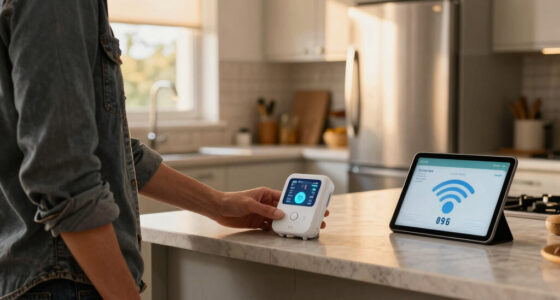
Finding the best humidity monitor with remote sensors involves balancing accuracy, connectivity options, ease of installation, and price. The X-Sense Wi-Fi Thermometer Hygrometer stands out as the overall top pick thanks to its reliable Wi-Fi connection and clear LCD display. The GoveeLife WiFi Thermometer Hygrometer 5-in-1 offers excellent value with multiple sensors and a user-friendly setup, making it ideal for larger spaces. However, some models rely on cellular data or require extensive setup, which may not suit every user. Continue reading for a detailed breakdown of each option and help deciding which monitor fits your specific needs.

Get home appliances delivered free with Prime
- Fast, free delivery on millions of items
- Prime Video, Amazon Music and more included
- Member-only deals all year
Complete the kit


Key Takeaways
- The best options combine reliable remote sensing with seamless Wi-Fi or cellular connectivity.
- Multi-sensor packages are ideal for larger areas but may come at a higher price or complexity.
- Ease of setup and app usability vary widely, impacting overall user experience.
- More expensive models often include additional features like alerts and data logging, not always necessary for casual users.
- Tradeoffs include connectivity type, sensor range, and whether the device is suited for indoor, outdoor, or industrial environments.
| X-Sense Wi-Fi Thermometer Hygrometer with LCD, 3 Sensors & Base Station |  | Best Overall for Home Environment Monitoring | Lower Temperature Range: 32 °F | Upper Temperature Range: 60 °C | Temperature Accuracy: ±0.2°C | VIEW LATEST PRICE | See Our Full Breakdown |
| GoveeLife WiFi Thermometer Hygrometer 5-in-1, 3-Pack with Gateway | 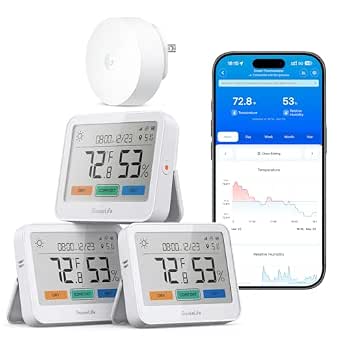 | Best for Large-Scale or Multi-Room Monitoring | Number of Devices: 3 | Connectivity: WiFi, Bluetooth | Range: 1640 ft | VIEW LATEST PRICE | See Our Full Breakdown |
| Frigga 4G Cellular Temperature & Humidity Monitor with Email App Alerts |  | Best for Remote or Off-Grid Locations | Connectivity: 4G cellular and Wi-Fi | Battery Life: Up to 7 days | Service Duration: 2 years included, renewable | VIEW LATEST PRICE | See Our Full Breakdown |
| GoveeLife 2.0 WiFi Hygrometer Thermometer with Gateway, Mini Sensor 3-Pack | 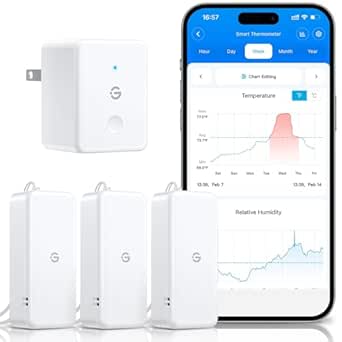 | Best for Compact, Indoor Use with Data Export | Battery Life: 2 years | Temperature Accuracy: ±0.3°C | Humidity Accuracy: ±3% RH | VIEW LATEST PRICE | See Our Full Breakdown |
| Geevon Wireless Indoor Outdoor Thermometer with 3 Remote Sensors |  | Best for Multi-Location Indoor/Outdoor Monitoring | Display: Large LCD | Wireless Range: 200FT/60M | Number of Sensors: 3 | VIEW LATEST PRICE | See Our Full Breakdown |
| eMylo WiFi Thermometer Hygrometer, Smart Indoor Temperature and Humidity Sensor |  | Best Overall for Smart Home Integration | Connectivity: WiFi 2.4GHz | App Compatibility: Smart Life, Tuya | Display: LED electronic display | VIEW LATEST PRICE | See Our Full Breakdown |
| YoLink Smart Temp & Humidity Sensor 2 Pack with Hub |  | Best Long-Range Sensor System | Connectivity: LoRa | Range: 1/4 mile in open air | Battery Life: Up to 2 years | VIEW LATEST PRICE | See Our Full Breakdown |
| Govee WiFi Thermometer Hygrometer H5179 (2 Pack) |  | Best for Fast, Accurate Readings | Sensor Type: Swiss made sensor | Temperature Accuracy: ±0.54℉/±0.3℃ | Humidity Accuracy: ±3%RH | VIEW LATEST PRICE | See Our Full Breakdown |
| VIVOSUN Digital Thermometer and Hygrometer with 3 Remote Sensors |  | Best for Versatile Indoor/Outdoor Monitoring | Temperature Range: -4℉ to 158℉ (-20℃ to 70℃) | Humidity Range: 20% to 95% | Temperature Accuracy: ± 1.5°F / ± 1°C | VIEW LATEST PRICE | See Our Full Breakdown |
| humidity monitor with remote sensor | Connectivity | Temperature Accuracy |
|---|---|---|
| X-Sense Wi-Fi Thermometer Hygr | Wi-Fi 2.4 GHz only | ±0.2°C |
| GoveeLife WiFi Thermometer Hyg | WiFi, Bluetooth | ±0.36°F |
| Frigga 4G Cellular Temperature | 4G cellular and Wi-Fi | — |
| GoveeLife 2.0 WiFi Hygrometer | WiFi (2.4GHz only) | ±0.3°C |
| Geevon Wireless Indoor Outdoor | — | — |
| eMylo WiFi Thermometer Hygrome | WiFi 2.4GHz | — |
| YoLink Smart Temp & Humidity S | LoRa | — |
| Govee WiFi Thermometer Hygrome | WiFi and Bluetooth | ±0.54℉/±0.3℃ |
| VIVOSUN Digital Thermometer an | — | ± 1.5°F / ± 1°C |
More Details on Our Top Picks
X-Sense Wi-Fi Thermometer Hygrometer with LCD, 3 Sensors & Base Station
This Wi-Fi-enabled thermometer and hygrometer excels in delivering accurate readings with a simple LCD display and multiple sensors. Compared to the GoveeLife 2.0 set, it offers real-time app notifications and customizable alerts, making it ideal for continuous monitoring in spaces like wine cellars or basements. However, its limited temperature range and Wi-Fi compatibility restrict use in very high or low-temperature environments and on 5.0 GHz networks. The inclusion of a base station and app integration provides convenience, but setup requires both components to be connected properly. This pick makes the most sense for homeowners seeking reliable, remote monitoring with straightforward alerts, especially where Wi-Fi stability is strong.
Pros:- Highly accurate temperature and humidity readings
- Supports remote monitoring via app with customizable alerts
- Multiple sensors and data tracking for detailed insights
Cons:- Incompatible with 5.0 GHz Wi-Fi networks
- Requires app setup and base station connection, adding complexity
Best for: Homeowners needing dependable, remote climate tracking in specific rooms or cellars
Not ideal for: Those with 5GHz Wi-Fi networks or environments exceeding 60°C, due to compatibility and range limits
- Lower Temperature Range:32 °F
- Upper Temperature Range:60 °C
- Temperature Accuracy:±0.2°C
- Connectivity:Wi-Fi 2.4 GHz only
- Display:LCD
- Measurements:Temperature and humidity
Our verdict“A solid choice for users seeking reliable remote monitoring within a Wi-Fi network, with some limitations on environment range.”
GoveeLife WiFi Thermometer Hygrometer 5-in-1, 3-Pack with Gateway
This set of three devices paired with a gateway provides extensive coverage and high-precision readings, making it ideal for greenhouses, larger homes, or sensitive storage. Unlike the X-Sense, which focuses on a single environment, this kit’s long-range connectivity of up to 1640 feet ensures comprehensive monitoring across multiple rooms or outdoor areas. Its large, color-coded LCD display simplifies quick assessments, though some features depend on app setup and the gateway. The inclusion of three sensors allows for monitoring various zones simultaneously, but the need for a gateway and occasional battery replacements can add to maintenance. It fits well for users who prioritize broad coverage and high accuracy in different spaces.
Pros:- Long-range connectivity up to 1640 feet
- High-precision sensors for accurate readings
- Large LCD with color comfort indicator
- Supports multiple sensors for multi-zone monitoring
Cons:- Requires gateway for certain features like weather forecast
- Battery life is up to 2 years, but batteries need replacement
Best for: Gardeners, hobbyists, or homeowners with multiple zones needing real-time climate data
Not ideal for: Users with limited Wi-Fi range or seeking a simple single-sensor setup, as it’s more complex and costly
- Number of Devices:3
- Connectivity:WiFi, Bluetooth
- Range:1640 ft
- Display Size:3.7 inches
- Temperature Accuracy:±0.36°F
- Battery Life:Up to 2 years
Our verdict“Best suited for those who need reliable, multi-location monitoring over long distances with detailed data insights.”
Frigga 4G Cellular Temperature & Humidity Monitor with Email App Alerts
The Frigga monitor’s cellular connectivity sets it apart, supporting off-grid environments like cabins or warehouses where Wi-Fi is unreliable. Unlike the Wi-Fi-centric options, its 4G capability provides real-time updates via cellular networks, making it perfect for remote sites. The rechargeable battery and secure data storage offer flexibility, but the device’s battery life of only about a week demands frequent recharging or constant power. Its subscription-based service after two years can be a downside for budget-conscious users. This model makes the most sense for users needing dependable remote alerts in locations without steady internet access, where cellular connectivity is vital.
Pros:- Supports off-grid monitoring via cellular connectivity
- Real-time app, email, and voice alerts
- Secure data storage with easy sharing
Cons:- Battery life lasts only about 7 days
- Additional annual service fee after 2 years
Best for: Remote property owners, warehouse managers, or vacation home caretakers
Not ideal for: Indoor-only users or those with steady Wi-Fi, as it involves cellular plans and shorter battery life
- Connectivity:4G cellular and Wi-Fi
- Battery Life:Up to 7 days
- Service Duration:2 years included, renewable
- Monitoring Range:Suitable for remote locations
- Data Storage:Up to 2 years
- Alerts:Multi-channel including email and voice
Our verdict“Ideal for remote sites where Wi-Fi isn’t available, and cellular data is essential for monitoring.”
GoveeLife 2.0 WiFi Hygrometer Thermometer with Gateway, Mini Sensor 3-Pack
This set offers high-precision, compact sensors for indoor environments like wine cellars or greenhouses, with data export capabilities. Unlike the larger GoveeLife 5-in-1, these mini sensors focus on accuracy and portability, with a smaller LCD display and support for Wi-Fi (2.4GHz only). The ability to export trend data over 20 days to 2 years provides useful insights, but compatibility depends on the specific gateway model, which could limit flexibility. The sensors’ small size makes them easy to place in tight spaces, yet they are restricted to indoor environments and require a compatible gateway. It’s a strong pick for detail-oriented users who need portable, accurate monitoring with historical data analysis.
Pros:- High-precision temperature and humidity measurements
- Supports data export and historical trend analysis
- Compact and portable design
Cons:- Supports only 2.4GHz Wi-Fi networks
- Requires compatible gateway for full functionality
Best for: Wine enthusiasts, greenhouse growers, or indoor hobbyists needing detailed data and portability
Not ideal for: Outdoor or multi-zone monitoring over large distances, due to Wi-Fi and gateway limitations
- Battery Life:2 years
- Temperature Accuracy:±0.3°C
- Humidity Accuracy:±3% RH
- Connectivity:WiFi (2.4GHz only)
- Data Storage Duration:up to 2 years
- Refresh Rate:every 2 seconds
Our verdict“Best suited for indoor environments where detailed data export and portability are valued over broad coverage.”
Geevon Wireless Indoor Outdoor Thermometer with 3 Remote Sensors
This versatile thermometer set supports up to three remote sensors within a 200-foot range, making it suitable for monitoring multiple indoor and outdoor spots simultaneously. Unlike the more advanced Wi-Fi models, it relies on a large LCD display and simple wireless technology, which keeps setup straightforward but limits data tracking history or remote alerts. Its wide temperature and humidity ranges are practical for outdoor use, yet the absence of app connectivity means less automation and fewer alert options. Batteries are not included, adding another layer of setup. This product appeals to users who prefer a straightforward, multi-sensor environment monitor without the need for internet or app integration.
Pros:- Supports three sensors for comprehensive coverage
- Max/Min records and alerts for environmental tracking
- Wide temperature and humidity ranges for outdoor use
Cons:- Batteries not included, requiring additional purchase
- Limited to local display with no app or remote notifications
Best for: Homeowners or gardeners wanting a simple, multi-spot indoor/outdoor monitoring solution
Not ideal for: Tech-savvy users seeking remote alerts or detailed historical data, as this lacks app features
- Display:Large LCD
- Wireless Range:200FT/60M
- Number of Sensors:3
- Indoor Temperature Range:50°F ~ 140°F
- Outdoor Temperature Range:-58°F ~ 158°F
- Accuracy:± 1.8°F / 1°C for temperature
Our verdict“A practical choice for those who need basic, multi-location indoor and outdoor temperature and humidity readings without digital automation.”
eMylo WiFi Thermometer Hygrometer, Smart Indoor Temperature and Humidity Sensor
This device stands out for its seamless WiFi connectivity and compatibility with popular smart home platforms like Alexa and Google Assistant, making it ideal for those who want real-time remote monitoring without extra hubs. Unlike the YoLink sensors, it doesn’t offer long-range capabilities but excels in indoor environments where WiFi is reliable. Its smart alerts and voice control make it convenient for daily use, yet it depends heavily on WiFi stability and the app for full functionality, which could be a limitation for users seeking a more independent sensor network. This pick is perfect for homeowners integrating environmental monitoring into their existing smart ecosystem, prioritizing convenience over long-range versatility.
Pros:- Real-time remote monitoring via app
- Smart alerts for temperature and humidity thresholds
- Voice control with Alexa and Google Assistant
- Seamless integration with smart home devices
Cons:- Limited voice control to checking readings only
- Requires WiFi connection for operation
- No hub needed, but dependent on app for full features
Best for: Smart home enthusiasts seeking easy integration and real-time alerts without extra hubs
Not ideal for: Users in large or outdoor spaces needing long-range monitoring or independent sensors
- Connectivity:WiFi 2.4GHz
- App Compatibility:Smart Life, Tuya
- Display:LED electronic display
- Features:Smart alerts, data history, low-battery alerts, voice control
Our verdict“Best suited for smart home users wanting straightforward indoor monitoring with voice control and app alerts.”
YoLink Smart Temp & Humidity Sensor 2 Pack with Hub
This set offers remarkable long-range capabilities with LoRa connectivity, supporting indoor monitoring in large spaces like greenhouses or wine cellars, unlike the Govee H5179 which is more suited for smaller environments. The included hub and two sensors provide stable data transmission over up to 1/4 mile in open air, making it the ideal choice where WiFi coverage is limited or unreliable. While it excels in outdoor or expansive indoor settings, it doesn’t support outdoor use or temperature monitoring for Alexa, which could be a drawback for some. It makes the most sense for users needing long-distance monitoring with multiple alert options, but those seeking outdoor versatility should look elsewhere.
Pros:- Long-range connectivity up to 1/4 mile
- Battery life of up to 2 years
- Supports multiple alert methods including SMS and email
- Easy setup with QR code scanning
Cons:- Not suitable for outdoor use
- Temperature monitoring only for Alexa
- Requires a hub for operation
Best for: Indoor spaces requiring long-range, reliable monitoring with alert flexibility
Not ideal for: Small apartments or outdoor environments—it’s designed for long-range indoor use and needs a hub
- Connectivity:LoRa
- Range:1/4 mile in open air
- Battery Life:Up to 2 years
- Included:2 sensors + 1 hub
- Compatibility:Alexa (temperature only), IFTTT
- Alerts:Push notifications, email, SMS
Our verdict“Best for users needing extensive indoor coverage with long-range sensors and multi-channel alerts.”
Govee WiFi Thermometer Hygrometer H5179 (2 Pack)
This pair excels in delivering quick, precise temperature and humidity data through WiFi and Bluetooth, providing real-time updates and data export options, making it more suitable for smaller or controlled environments like greenhouses or basements than the YoLink system. Compared with the VIVOSUN, it offers faster readings and supports customizable alerts, but it doesn’t support 5G WiFi, which could limit its connectivity in some setups. Its reliance on batteries and Bluetooth support means it’s easy to place but may need frequent battery replacements. This model is best for users prioritizing accuracy and ease of use over long-range or outdoor applications.
Pros:- Real-time monitoring with app alerts
- Fast and precise temperature and humidity readings
- Supports data export and historical trend analysis
- Easy to place with included lanyard
Cons:- Does not support 5G WiFi
- Bluetooth connectivity only
- Requires batteries for operation
Best for: Indoor environments needing fast, reliable, and accurate temperature and humidity readings
Not ideal for: Large outdoor spaces or users needing 5G WiFi compatibility—it’s primarily designed for smaller environments
- Sensor Type:Swiss made sensor
- Temperature Accuracy:±0.54℉/±0.3℃
- Humidity Accuracy:±3%RH
- Connectivity:WiFi and Bluetooth
- Data Storage:20 days online, up to 2 years exported
- Power:3 AA batteries
Our verdict“Ideal for users who need accurate, quick environmental data in small or indoor spaces without long-range requirements.”
VIVOSUN Digital Thermometer and Hygrometer with 3 Remote Sensors
This model supports up to three remote sensors within a 200ft range, providing flexible placement for indoor and outdoor environments—more versatile than the Govee H5179, which is limited to indoor use. Its large touchscreen LCD and adjustable backlight make it user-friendly, especially for outdoor setups like greenhouses or patios. However, the reliance on 8 AAA batteries means frequent replacements, and its temperature accuracy of ±1.5°F may not satisfy those requiring precise climate data. Still, its ability to monitor multiple locations simultaneously makes it a strong choice for users managing several zones, despite its indoor/outdoor temperature limits.
Pros:- Supports up to 3 remote sensors
- Large, easy-to-read touchscreen LCD
- Versatile mounting options
- Strong signal penetration up to 200ft
Cons:- Requires 8 AAA batteries with frequent replacement
- Temperature accuracy could be higher
- Limited outdoor temperature range
Best for: Homeowners needing multi-zone indoor/outdoor monitoring with a large display
Not ideal for: Users who prefer rechargeable systems or need highly precise temperature data for sensitive environments
- Temperature Range:-4℉ to 158℉ (-20℃ to 70℃)
- Humidity Range:20% to 95%
- Temperature Accuracy:± 1.5°F / ± 1°C
- Wireless Range:200ft / 60m
- Power:8 x AAA batteries
Our verdict“Best suited for users seeking flexible indoor and outdoor monitoring across multiple zones with a clear display.”

How We Picked
These products were evaluated based on several core criteria: accuracy of humidity readings, reliability of remote sensors, connectivity options (Wi-Fi, cellular, or hub-based), ease of installation and use, build quality, and overall value. Additional factors like app functionality, alert systems, and sensor range played a role in ranking. Devices that offered a good balance of performance and affordability, especially those with multi-sensor setups, received higher placement. We prioritized products with consistent performance across various environments, and avoided those with frequent connectivity issues or overly complicated setups to ensure practical recommendations for most users.| humidity monitor with remote sensor | Temperature Accuracy |
|---|---|
| X-Sense Wi-Fi Thermometer Hygr | ±0.2°C |
| GoveeLife WiFi Thermometer Hyg | ±0.36°F |
| Frigga 4G Cellular Temperature | — |
| GoveeLife 2.0 WiFi Hygrometer | ±0.3°C |
| Geevon Wireless Indoor Outdoor | — |
| eMylo WiFi Thermometer Hygrome | — |
| YoLink Smart Temp & Humidity S | — |
| Govee WiFi Thermometer Hygrome | ±0.54℉/±0.3℃ |
| VIVOSUN Digital Thermometer an | ± 1.5°F / ± 1°C |
Factors to Consider When Choosing Best Humidity Monitor With Remote Sensors
Choosing the best humidity monitor with remote sensors involves understanding key features that impact usability, accuracy, and value. It’s important to consider how you’ll use the device, the environment it will monitor, and your technical comfort level. Making informed decisions helps avoid common pitfalls like purchasing overly complex systems or sacrificing accuracy for ease. Here are some factors to guide your choice:Connectivity Type
Deciding between Wi-Fi, cellular, or hub-based connectivity is crucial. Wi-Fi models are generally easier to set up and integrate with home networks, making them suitable for most indoor environments. Cellular options provide remote access from anywhere and are better for outdoor or industrial settings but tend to be more expensive and require a data plan. Hub-based systems can offer reliable local control but may need additional hardware and complicate setup. Consider your environment and how remote you need access to your data when choosing connectivity.
Sensor Range and Placement
The effectiveness of remote sensors depends on their range and placement flexibility. Longer-range sensors are better for large or multi-room setups, but they often cost more and may have slower updates. Proper placement—away from direct sunlight, drafts, or heat sources—is vital for accurate readings. Multi-sensor kits are ideal for comprehensive coverage but can be challenging to calibrate and manage. Think about your space size and whether you need sensors indoors, outdoors, or both.
Ease of Use and App Features
User-friendly apps with clear interfaces and reliable alerts significantly improve the monitoring experience. Some devices feature detailed graphs, historical data, and customizable notifications, which add value for serious users. Others may have cluttered or unintuitive apps, leading to frustration. Consider your comfort with technology and whether you prefer simple push alerts or detailed analytics, as this influences overall satisfaction.
Build Quality and Durability
Durability matters if the device is placed in challenging environments like basements, outdoor areas, or humid spaces. Look for waterproof or weather-resistant models if outdoor monitoring is needed. Indoor units should have stable mounts or stands; flimsy construction can lead to inaccurate readings or damage. Investing in well-built devices minimizes maintenance and replacement costs over time.
Price and Additional Features
Higher-priced models often include advanced features such as data logging, multiple sensor types, or integration with smart home systems. However, for many users, basic remote sensing and alerts suffice. Avoid paying extra for features you won’t use, but consider investing in a slightly more expensive model if it provides crucial capabilities like real-time alerts or extensive historical data. Balance your budget against your monitoring needs to find the best value.
Frequently Asked Questions
Can I use a humidity monitor with remote sensors outdoors?
Yes, but only if the device specifically states it is weather-resistant or designed for outdoor use. Many indoor models are not built to withstand moisture, temperature swings, or direct sunlight, which can damage sensors or produce inaccurate readings. When choosing for outdoor use, look for devices with waterproof ratings, rugged casings, and sensors calibrated for outdoor conditions. Proper placement and regular maintenance also help ensure reliable data.
How often do remote sensors transmit data?
The frequency of data transmission varies among models, typically ranging from every few seconds to every 10-15 minutes. Faster updates are useful when monitoring rapidly changing environments, but they can drain batteries more quickly. For most indoor applications, a 5- to 10-minute interval strikes a good balance between real-time awareness and battery life. Always check the specifications to match your needs for timeliness and power efficiency.
Is it necessary to pay more for multiple sensors?
Not necessarily, but multiple sensors provide broader coverage for larger spaces or multiple rooms, which is often worth the extra cost. The key consideration is whether your environment requires monitoring in different zones simultaneously. Cheaper single-sensor units might suffice for small, contained areas, but multi-sensor kits offer more comprehensive data and can help identify localized issues like damp spots or temperature variations.
Do these devices integrate with smart home systems?
Many modern humidity monitors with remote sensors can connect to smart home ecosystems via platforms like Alexa, Google Home, or IFTTT. Integration allows for automated alerts, data sharing, and control within your existing setup. However, compatibility varies widely, so if smart home integration is a priority, verify the device’s compatibility before purchasing. Higher-end models are more likely to support seamless integration and provide advanced automation options.
What is the typical battery life of remote sensors?
Battery life depends on sensor design, transmission frequency, and usage patterns. Most remote sensors last anywhere from 6 months to 2 years on standard batteries, with some models offering rechargeable options. Sensors with frequent updates or cellular connectivity tend to consume more power. For convenience and peace of mind, choose models with longer battery life, especially if access to power outlets is limited or if you prefer minimal maintenance.