You can successfully combine opening windows and using air purifiers to boost indoor air quality by timing them wisely. Open windows during times when outdoor air is cleaner, like early mornings or after rain, to bring in fresh air and dilute indoor pollutants. Close windows during peak traffic or high pollen periods, then turn on your purifiers for extra filtration. Following these strategies helps you maximize air quality—continue exploring to discover more tips for healthier indoor spaces.

Get home appliances delivered free with Prime
- Fast, free delivery on millions of items
- Prime Video, Amazon Music and more included
- Member-only deals all year
Key Takeaways
- Coordinate window opening during low outdoor pollution or pollen times to maximize fresh air benefits.
- Use air purifiers when windows are closed during peak pollution or high pollen seasons for continuous filtration.
- Open windows briefly after activities like cooking or cleaning to quickly remove indoor pollutants.
- Monitor outdoor air quality to decide optimal times for ventilation and purifier use.
- Combine natural ventilation with purifiers for enhanced indoor air quality, especially during high pollution periods.
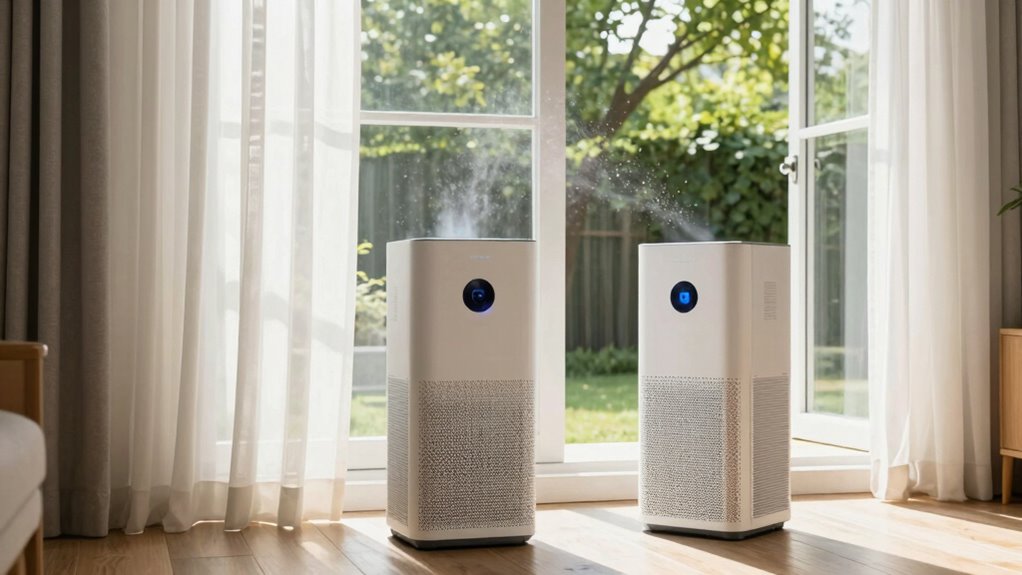
Opening your windows and running air purifiers can improve indoor air quality, but timing is key. When you want to maximize the benefits of both, you need to consider how ventilation strategies affect the air inside your home. Fresh air from open windows can dilute indoor pollutants and bring in oxygen, but if you open them at the wrong time, you might also let in outdoor pollutants like pollen, dust, or pollution from traffic. Conversely, air purifiers are excellent at removing airborne allergens and particles, but they work best when the air in your space is relatively still. Combining these methods effectively requires a bit of planning and awareness of your environment.
First, think about the time of day and outdoor conditions. Early mornings or late evenings often have cleaner air, especially if pollution levels are lower or if pollen counts are high during the day. Opening your windows during these times can help improve indoor air quality without inviting excess pollutants. On the other hand, during peak traffic hours or high pollen seasons, it’s better to keep windows closed, relying more on air purifiers to filter the air inside. This way, you prevent the ingress of pollutants while still maintaining good air quality with your purifier.
Open windows during cleaner air times and rely on purifiers during peak pollution or pollen seasons.
Another essential aspect is understanding your home’s ventilation needs. If you live in an urban area with high outdoor pollution, strategic ventilation becomes paramount. Use natural ventilation when outdoor air is cleaner, such as after a rainstorm or during low traffic periods. When outdoor air quality deteriorates, close the windows and turn on your air purifier to continuously trap airborne particles. This approach ensures your indoor air stays healthy without sacrificing fresh air intake. Additionally, awareness of outdoor pollution levels and indoor air quality can help you decide the best times to open or close windows for optimal results.
You also need to be mindful of indoor activities that generate pollutants—cooking, cleaning, or smoking, for example. During or immediately after these activities, open windows briefly to flush out contaminants, then shut them to allow the purifier to do its work. Regularly maintaining your air purifier by changing filters ensures it operates at peak efficiency, complementing your ventilation efforts.
Products Worth Considering

Levoit Vital 100S-P Air Purifier for Home and Pets

Blueair Blue Pure 511i Max Smart Air Purifier

Levoit Core 300S-P Smart Wi-Fi Air Purifier
As an affiliate, we earn on qualifying purchases.
Frequently Asked Questions
How Do I Determine the Best Time to Open Windows for Fresh Air?
You should determine the best time to open windows by considering your ventilation timing and fresh air schedule. Aim to open windows during times when outdoor air quality is high, like early mornings or after rain. Avoid opening windows during peak pollution hours or when outdoor air is stale. By syncing your ventilation timing with these periods, you maximize fresh air intake while minimizing pollutants, keeping your indoor environment healthier.
Can Outdoor Pollution Negate the Benefits of Indoor Purifiers?
Outdoor pollution can sometimes negate your indoor purifier’s benefits, especially when outdoor allergens and pollution levels spike. Think of your home as a fortress; opening windows during high pollution acts like inviting trouble inside. If outdoor air quality is poor, keep windows closed and rely on purifiers. Wait for cleaner air hours, like early mornings or late evenings, to open windows, ensuring your indoor environment stays fresh and healthy.
What Types of Purifiers Work Best With Natural Ventilation?
You should choose air purifiers with high compatibility for natural ventilation, like HEPA filters or activated carbon filters, which work well alongside open windows. These purifiers enhance natural ventilation efficiency by capturing airborne pollutants, dust, and odors effectively. Make certain your purifier’s airflow complements your ventilation habits, avoiding over-reliance on mechanical filtration. Properly timed use maximizes indoor air quality, especially during outdoor pollution spikes, making your space healthier and more comfortable.
How Often Should I Open Windows to Improve Indoor Air Quality?
You should open your windows for about 10-15 minutes daily, especially during mild weather. Imagine a family in a humid climate, opening windows in the morning to improve air quality, humidity control, and reduce indoor pollutants. This quick ventilation also helps with noise reduction and keeps fresh air circulating. Regularly opening windows prevents stale air buildup, boosting overall comfort and health in your home.
Are There Specific Weather Conditions Ideal for Opening Windows?
You should open windows during mild weather with low wind speeds, typically in the late morning or early evening. Avoid days with high wind speed, which can stir up pollen and seasonal allergies, making indoor air worse. Calm, breezy days help clear indoor pollutants without bringing in more allergens. If you suffer from seasonal allergies, check local weather forecasts to pick the best times for airing out your home safely.
Conclusion
To maximize indoor air quality, it’s smart to open windows and run purifiers at the right times. Studies show that proper ventilation can reduce airborne pollutants by up to 50%. By timing your window openings during low outdoor pollution hours and running purifiers when needed, you create a healthier environment. Remember, combining these strategies thoughtfully can substantially improve air quality, making your space safer and more comfortable for everyone.