
You don’t need a remodel to boost your bathroom’s ventilation. Start by installing or upgrading your exhaust fan near the shower or tub, making sure it vents directly outside. Keep the fan on during and after showers for at least 20 minutes, and regularly clean and maintain it for better efficiency. Considering advanced options like humidity sensors can make a big difference. Keep exploring to discover more simple tips that can transform your bathroom’s air quality.

Get home appliances delivered free with Prime
- Fast, free delivery on millions of items
- Prime Video, Amazon Music and more included
- Member-only deals all year
Key Takeaways
- Properly position and vent your existing exhaust fan directly outside for optimal moisture removal.
- Regularly clean and maintain your current ventilation system to ensure maximum efficiency.
- Use a humidity sensor or timer to automatically run the fan longer after showers.
- Upgrade to a more powerful or advanced fan without needing a full remodel.
- Implement moisture control practices like running the fan during and after showers for better air quality.

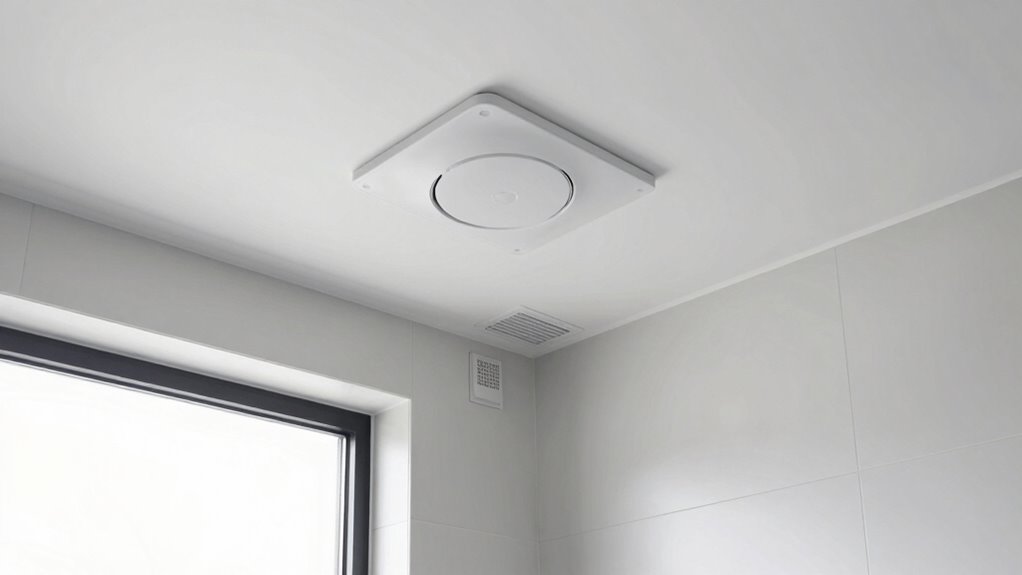
Proper bathroom ventilation is essential for maintaining a fresh, mold-free space, especially since bathrooms are prone to excess moisture. When you focus on good ventilation, you help prevent the buildup of humidity that encourages mold growth and unpleasant odors. One of the most effective ways to improve this is by paying attention to exhaust fan placement. If your exhaust fan is poorly positioned, it may not efficiently remove moist air, leaving corners or areas of your bathroom damp. Ideally, the fan should be installed near the shower or tub, where moisture levels are highest, and directly vented outside. This ensures that humid air is quickly expelled, reducing overall moisture levels in the room.
You don’t necessarily need a complete remodel to upgrade your bathroom’s ventilation, but making small adjustments can make a significant difference. Check where your existing exhaust fan is placed—if it’s in a corner or too far from the shower, consider relocating it or adding an additional fan. Proper placement allows for better airflow, helping moisture escape before it settles on surfaces. When installing or repositioning a fan, make sure it’s vented directly outside, not into an attic or crawl space. This direct venting prevents moisture from lingering inside walls or ceilings, which can lead to hidden mold issues and structural damage over time. Additionally, ventilation effectiveness can vary based on the fan’s design and placement, so choosing the right model is crucial. Ensuring proper airflow not only improves moisture removal but also contributes to better overall indoor air quality. Proper ventilation maintenance by regularly cleaning and inspecting your fan can also improve its efficiency and lifespan. Regular maintenance can also help prevent clogged vents that reduce airflow and compromise your bathroom’s air quality.
Moisture control is all about consistency. Running the exhaust fan during and after showers is key—don’t just turn it on when you’re finished. Keep it running for at least 20 minutes afterward to pull out residual humidity. If your bathroom doesn’t have a fan, or if yours is too weak, upgrading to a more powerful unit can drastically improve moisture control. Look for fans with a higher cubic feet per minute (CFM) rating suitable for your bathroom’s size. Additionally, consider installing a humidity sensor that automatically turns the fan on when moisture levels rise. This way, you don’t have to remember to switch it on and off, ensuring continuous moisture management. Regularly checking air quality in your bathroom can help you identify if your current ventilation setup is effective or needs improvement.
Products Worth Considering

Ring Battery Doorbell 2K Plus, Indoor Cam 2K, and Window & Door Sensor Bundle

Philips Hue Bridge Pro Starter Kit with 4 A19 E26 Color Smart Bulbs

Dyson Cyclone V10 Origin Cordless Vacuum
As an affiliate, we earn on qualifying purchases.
Frequently Asked Questions
Can Small Changes Significantly Improve Bathroom Air Quality?
Small changes can markedly improve bathroom air quality through simple ventilation improvements. You can install or upgrade exhaust fans, ensuring they run during and after showers. Opening windows regularly helps freshen the air, and using a dehumidifier reduces moisture buildup. These quick adjustments boost ventilation, prevent mold growth, and enhance air quality without the need for a full remodel. Small efforts make a big difference in creating a healthier bathroom environment.
How Often Should Bathroom Vents Be Cleaned or Maintained?
You should clean your bathroom vents at least every six months to prevent mold and guarantee proper ventilation maintenance. Regular cleaning helps remove dust, debris, and potential mold spores that can hinder airflow. By staying on top of vent upkeep, you improve air quality, reduce moisture buildup, and prevent mold growth. Consistent maintenance keeps your bathroom fresh, safe, and well-ventilated without needing a full remodel.
Are There Energy-Efficient Ventilation Options Available?
Did you know energy-efficient ventilation options can cut your bathroom’s energy use by up to 50%? Yes, smart fans are a great choice—they automatically turn on when needed, saving power and improving air quality. Many models are designed with energy efficiency in mind, featuring quieter operation and lower wattage. Upgrading to these options makes your bathroom more eco-friendly and reduces utility bills without sacrificing performance.
What Are Common Signs of Poor Bathroom Ventilation?
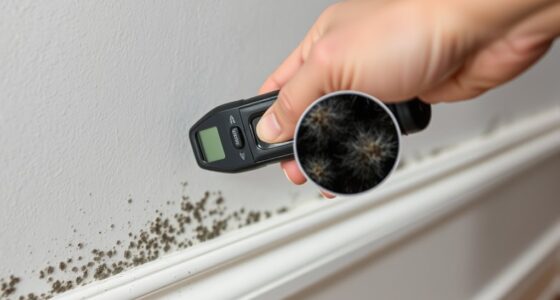
You’ll notice signs of poor bathroom ventilation through high humidity levels, which cause lingering moisture, mold, or peeling paint. Unpleasant odors that linger even after use also indicate inadequate airflow. If you see foggy mirrors or water spots around vents, it’s a sign humidity control isn’t effective. Addressing these issues helps eliminate odors faster and prevents moisture buildup, improving your bathroom’s air quality without needing a full remodel.
Can Natural Ventilation Be Effective Without Mechanical Systems?
Natural ventilation can be effective if passive airflow is properly harnessed through strategic window placement. When windows are positioned to promote cross-ventilation, invigorating air flows like a gentle breeze clearing out dampness and odors. You just need to open the right windows at the right times, creating a natural airflow that keeps your bathroom fresh without mechanical systems. Think of it as a breath of fresh air that refreshes your space effortlessly.
Conclusion
Improving your bathroom ventilation doesn’t require a costly remodel—simple upgrades like exhaust fans or regular window use can make a big difference. Did you know that poor ventilation is linked to increased mold growth, which can cause respiratory issues? By staying proactive with ventilation, you protect your health and preserve your bathroom’s condition. Remember, small changes today can prevent bigger problems tomorrow, keeping your bathroom fresh, dry, and safe for years to come.